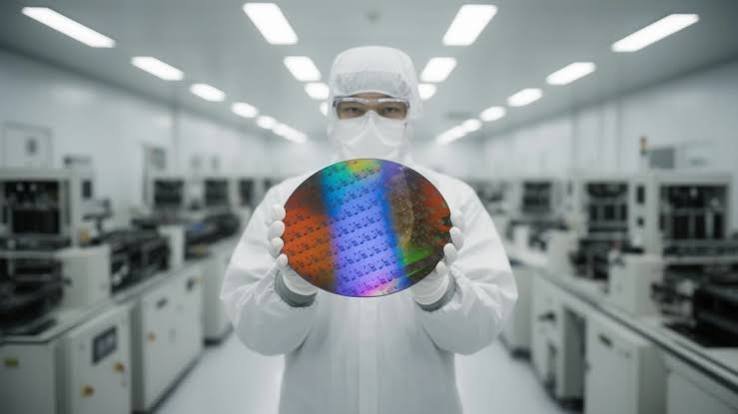
Nvidia Develops New AI Chip for China as It Seeks to Rebuild Market Presence
Nvidia is reportedly preparing a China-specific AI processor designed to meet local market requirements amid tightening US export restrictions and growing competition from domestic chipmakers.
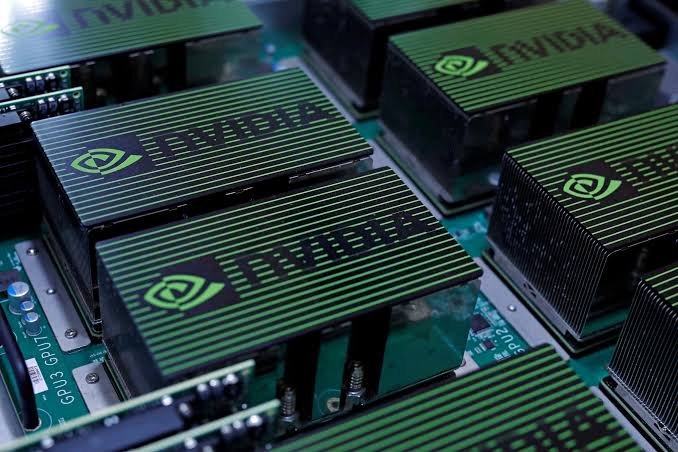
Nvidia is reportedly developing a new artificial intelligence (AI) processor specifically for the Chinese market, as the US chipmaker looks to maintain its position in one of the world's largest technology markets amid tightening export restrictions.
The reported move comes as Nvidia faces growing challenges in China. US export controls have restricted the sale of some of the company's most advanced AI accelerators, while Beijing is encouraging domestic technology companies to rely more heavily on locally developed semiconductor solutions. Nvidia's proposed China-focused product could therefore provide a way for the company to continue serving customers while complying with applicable export rules.
China-Specific Chip Targets Local AI Demand
Reports indicate that Nvidia is working on a modified AI chip designed around the requirements of the Chinese market. The product is expected to offer lower performance than Nvidia's most advanced processors, allowing it to remain within US export-control limits.
Earlier reports identified a Blackwell-based processor, tentatively referred to as B30A, which was reportedly intended to deliver substantially more performance than the H20 accelerator previously developed for China. The chip was described as a single-die design incorporating high-bandwidth memory and Nvidia's NVLink interconnect technology.
More recent reporting suggests Nvidia is also pursuing another China-focused design aimed at addressing local demand for AI inference and other workloads. The company has yet to publicly confirm the final specifications or commercial availability of the reported product.
Nvidia Faces Growing Pressure in China
China has become an increasingly difficult market for Nvidia as Washington tightens restrictions on the export of advanced AI processors.
The H20 was specifically developed to comply with earlier export requirements, but subsequent US restrictions affected Nvidia's ability to sell the product. The company has also faced pressure from Chinese authorities and customers, who are increasingly being encouraged to consider domestic alternatives.
Chinese semiconductor companies such as Huawei and Alibaba are expanding their AI accelerator offerings, giving local customers more options as access to Nvidia technology becomes less certain. Alibaba, for example, has introduced its Zhenwu M890 AI processor, which the company says offers three times the performance of its previous-generation chip.
New Chip Could Help Nvidia Retain Customers
A China-specific Nvidia processor could help the company defend its customer base while navigating the increasingly complex US-China semiconductor restrictions.
Nvidia's biggest advantage remains its broader AI software ecosystem. Its CUDA platform and established developer tools have helped make its accelerators widely adopted among AI developers and data-centre operators. This software advantage could make Nvidia hardware attractive to Chinese customers even when performance is deliberately limited.
However, Nvidia faces a difficult balance. A chip designed specifically to satisfy export restrictions must still provide enough performance and value to compete with domestic alternatives. At the same time, Chinese customers may be reluctant to build long-term AI infrastructure around products whose availability could change as US policies evolve.
Export Rules Remain a Key Uncertainty
The commercial prospects of any new China-focused Nvidia processor will depend heavily on regulatory approval.
Washington has repeatedly changed the rules governing advanced semiconductor exports to China, creating uncertainty for chipmakers and their customers. Nvidia has previously had to take substantial financial charges after restrictions affected its China-bound AI products.
The company therefore needs to develop products that can satisfy export requirements without making them commercially unattractive. Earlier reporting suggested the B30A could offer roughly half the raw computing capability of Nvidia's higher-end B300 accelerator while remaining more powerful than the H20.
Domestic Chinese Competition Intensifies
Nvidia's efforts come at a time when China is accelerating investment in its own AI semiconductor ecosystem.
Chinese technology companies and chip designers are developing processors intended to reduce dependence on imported accelerators. The availability of increasingly capable domestic products could make it harder for Nvidia to regain market share, particularly if Chinese customers prioritise supply security and long-term access over peak performance.
The launch of Alibaba's Zhenwu M890 illustrates the pace of this development. The company said its latest processor delivers a significant performance improvement over its previous generation, highlighting the progress being made by China's domestic AI chip industry.
Nvidia's China Strategy Faces a Critical Test
Nvidia's reported China-focused chip strategy reflects the wider fragmentation of the global AI semiconductor market. Export controls are forcing international chipmakers to develop different products for different regions, while governments are simultaneously encouraging domestic semiconductor production.
For Nvidia, maintaining access to China could help preserve an important customer base and protect its software ecosystem from losing ground to local competitors. However, the company must balance that opportunity against increasingly restrictive US regulations and China's push for technological self-reliance.
If approved and commercially successful, a new China-specific AI processor could give Nvidia another route into the Chinese market. But the longer-term outcome will depend on regulatory decisions, customer demand and the ability of domestic Chinese chipmakers to close the performance and software gap.