Chinese AI Chip Firms See Big Sales Growth After US Export Curbs
Sales at Cambricon and Moore Threads surge as domestic alternatives gain traction
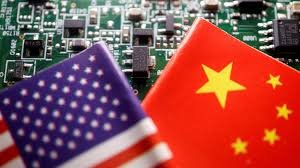
Chinese companies developing artificial intelligence (AI) chips, including Cambricon Technologies and Moore Threads, recorded sharp increases in revenue last year, partly driven by changes in US semiconductor export restrictions affecting China.
Moore Threads said its revenue for the previous year is expected to reach approximately 1.52 billion yuan, representing a year-on-year rise of about 247 per cent. The company attributed the growth to the widespread adoption of its MTT S5000 chip, which is based on its fourth-generation graphics processing unit architecture and entered mass production during the year. Moore Threads also projected a narrowing of its net loss, from 1.6 billion yuan to around 950 million yuan.
Founded in 2020 by Zhang Jianzhong, formerly head of Nvidia’s China business, Moore Threads was recently listed on the Shanghai Stock Exchange’s STAR Market. Following its listing and optimistic growth outlook, the company’s share price has risen sharply.
Cambricon Technologies, often regarded as a key player in China’s domestic AI chip industry, also posted a substantial rise in sales. During the first half of last year, the company reported revenue of 2.88 billion yuan, an increase of more than 4,300 per cent compared with the same period a year earlier. Another Chinese AI chipmaker, MetaX Integrated Circuits, reported revenue of 1.24 billion yuan over the first three quarters of the year, more than four times its previous annual figure.
Analysts suggest these developments could strengthen China’s domestic semiconductor capabilities and reduce reliance on overseas suppliers. However, major technology firms such as Tencent and ByteDance continue to face difficulties securing advanced chips.
Reports indicate that Chinese authorities are encouraging companies to adopt domestic alternatives to Nvidia’s H200 graphics processing unit, a high-end AI chip that remains eligible for export under current US regulations. As a result, some firms may cancel or scale back existing orders for the H200.
ByteDance had previously outlined plans to invest heavily in purchases of Nvidia’s H200 chips this year, but those plans now appear uncertain. Industry sources suggest that if conventional supply channels remain restricted, some companies may explore alternative routes to obtain advanced processors.
Nvidia’s chief executive is reportedly planning a visit to China later this month, where discussions with senior officials may include potential exports of the H200 chip.