According to the latest report by Mordor Intelligence, the semiconductor foundry market is set for robust growth over the coming years. The market is projected to reach USD 184.78 billion in 2026, rising from USD 171.72 billion in 2025, and is expected to expand further to USD 266.56 billion by 2031, reflecting a compound annual growth rate (CAGR) of 7.61% between 2026 and 2031.
This growth is being driven by increasing demand for advanced chips across industries such as consumer electronics, automotive, telecommunications and artificial intelligence. As businesses continue to outsource chip manufacturing to specialised foundries, the sector is experiencing rapid innovation, capacity expansion and strategic partnerships on a global scale.
Key Drivers Influencing the Semiconductor Foundry Market
Automotive Electrification Driving Chip Demand
The transition towards electric vehicles is significantly reshaping semiconductor demand, with manufacturers relying more heavily on both power-oriented chips and high-performance processors. This move towards increasingly integrated electronic systems is generating consistent, long-term demand for a wide range of chip technologies. Given the strict quality requirements and lengthy validation processes in the automotive sector, companies often secure production capacity well in advance. This approach not only ensures supply stability but also enables automakers to develop tailored solutions that enhance performance and differentiation.
Ashish Gautam, Senior Research Manager at Mordor Intelligence, notes that the semiconductor foundry market reflects steady capacity realignment and progression in technology nodes, influenced by demand visibility and disciplined capital investment. He adds that the analysis is based on structured data triangulation and transparent assumptions, providing decision-makers with a more dependable foundation than fragmented or less verifiable market estimates.
AI Chip Innovation Driving Advanced Node Demand
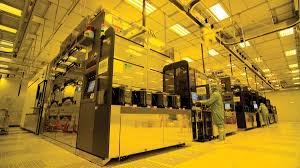
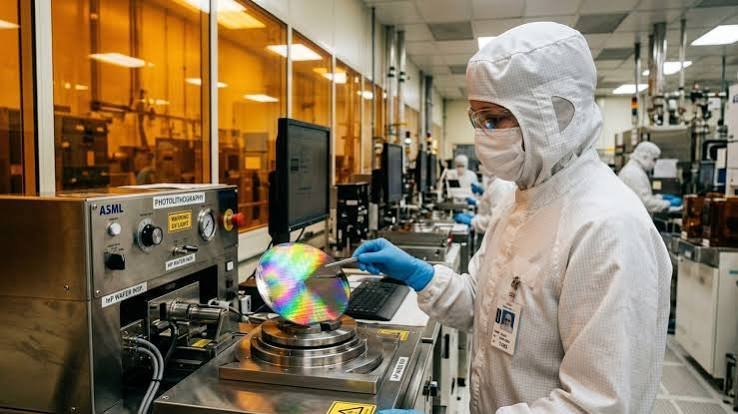
The accelerating race to develop more powerful artificial intelligence systems is pushing chipmakers towards increasingly advanced manufacturing technologies. As demand grows for faster and more efficient processors, companies are rapidly adopting cutting-edge nodes while enhancing packaging capabilities to support complex chip designs. The high costs and technical challenges associated with building such facilities have limited the number of competitors, making technological leadership a critical factor in maintaining market position.
Semiconductor Foundry Market Segmentation
By Technology Node:
10/7/5 nm and below; 16/14 nm; 20 nm; 28 nm; 45/40 nm; 65 nm and above
By Wafer Size:
300 mm; 200 mm; 150 mm
By Foundry Business Model:
Pure-play; IDM foundry services; Fab-lite
By Application:
Consumer electronics and communications; Automotive; Industrial and IoT; High-performance computing (HPC); Other applications
By Geography:
North America (United States, Canada, Mexico); South America (Brazil, Argentina, Rest of South America); Europe (Germany, United Kingdom, France, Italy, Rest of Europe); Asia-Pacific (China, Japan, South Korea, India, Rest of Asia-Pacific); Middle East (Saudi Arabia, United Arab Emirates, Rest of Middle East); Africa (South Africa, Rest of Africa)
Regional Analysis
Asia-Pacific continues to lead the global semiconductor landscape, supported by strong manufacturing ecosystems in countries such as Taiwan and South Korea. Taiwan remains at the forefront of advanced chip production, while China is focusing on mature technologies amid external constraints. Meanwhile, countries such as Malaysia and Singapore are strengthening their roles in assembly and testing, reinforcing the region’s overall supply chain resilience.
North America and Europe are steadily expanding their semiconductor capabilities through policy support and strategic investment. The United States is witnessing renewed momentum in fabrication, while Europe is leveraging its strengths in automotive and specialised chip production. Collectively, these regions are working towards building more resilient and self-sufficient semiconductor ecosystems.
Leading Companies
The semiconductor foundry industry remains highly competitive, with major players focusing on innovation, capacity expansion and strategic collaborations to strengthen their market position. Key companies include Taiwan Semiconductor Manufacturing Company (TSMC), Samsung Electronics, GlobalFoundries, United Microelectronics Corporation (UMC) and Semiconductor Manufacturing International Corporation (SMIC). These firms continue to shape the market outlook through ongoing technological advancements and large-scale production capabilities.
Related Markets
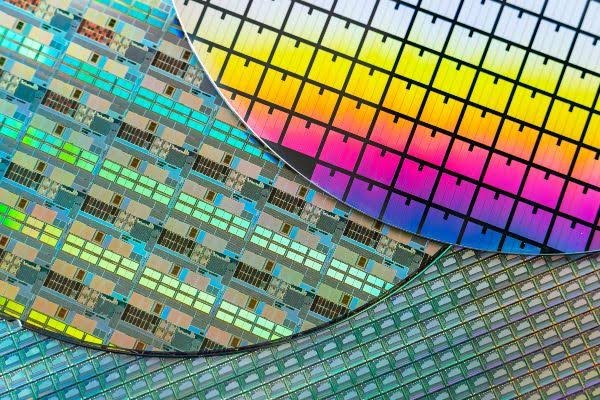
The silicon wafer market for power devices reached 1.43 billion square inches in 2025 and is forecast to grow to 2.05 billion square inches by 2031, registering a CAGR of 6.29%, driven by rising demand from electric vehicles, renewable energy systems and efficient power management technologies.
The semiconductor wafer reclaim market was valued at USD 0.73 billion in 2025 and is expected to reach USD 1.05 billion by 2031, growing at a CAGR of 6.4%, supported by an increasing focus on cost efficiency, sustainability and higher semiconductor production volumes.
Meanwhile, the silicon wafer market for analogue integrated circuits is projected to expand from 1.51 billion square inches in 2025 to 1.82 billion square inches by 2031, at a CAGR of 3.25%, underpinned by stable demand from the automotive, industrial and communications sectors.