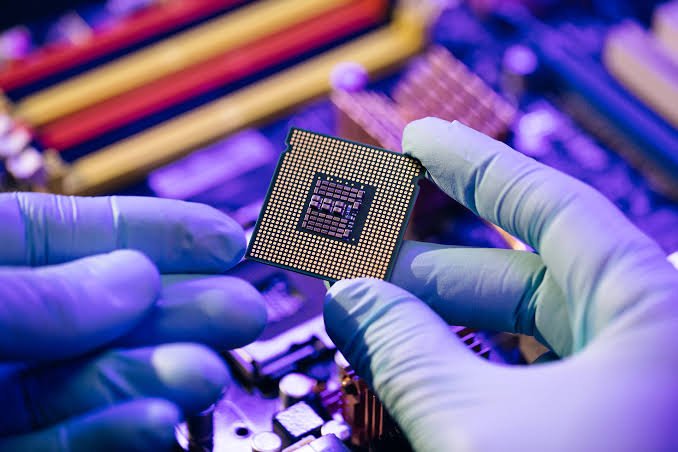
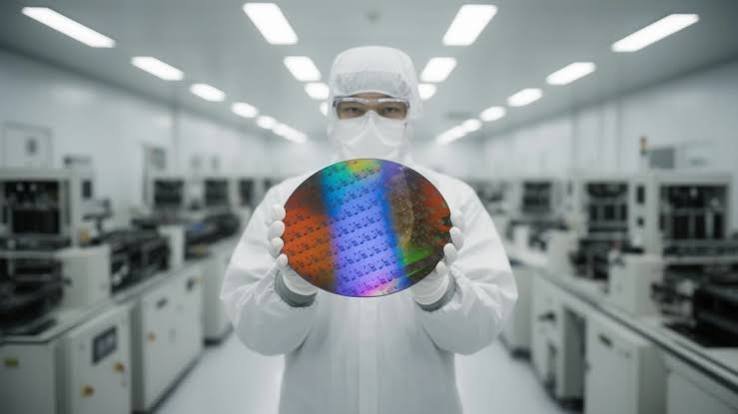
Data Centre Chip Market Set to Reach $687bn by 2032
AI, hyperscale cloud and custom silicon drive 15.9% CAGR across global semiconductor demand
According to MarketsandMarkets™, the Data Centre Chip Market is expected to reach USD 687.65 billion by 2032 from USD 283.16 billion in 2026, registering a CAGR of 15.9% during the forecast period.
Browse 170 market data Tables and 70 Figures spread through 280 Pages and an in-depth TOC on 'Data Centre Chip Market - Global Forecast to 2032'
Data Centre Chip Market Size & Forecast:
- Market Size Available for Years: 2021–2032
- 2026 Market Size: USD 283.16 billion
- 2032 Projected Market Size: USD 687.65 billion
- CAGR (2026 –2032): 15.9%
Data Centre Chip Market Trends & Insights:
- The data centre chip market is fueled by the rapid growth of hyperscale data centres and cloud-native architectures, supporting better processing efficiency, optimised resource use, and scalable performance with advanced chips, thus enabling faster data handling and dependable computing operations.
- By component, the memory segment is expected to register the highest CAGR of 16.7%.
- By data centre size, the medium-sized segment is projected to grow at the fastest rate from 2025 to 2032.
- By end user, the cloud service provider segment is expected to dominate the market.
- By region, the North America data centre chip market accounted for a 36.7% revenue share in 2025.
The data centre chip market will grow as hyperscale cloud providers increasingly shift toward workload-specific and custom silicon development to boost performance efficiency and lower total ownership costs. As standardised processors become less suitable for diverse and compute-heavy applications, companies are designing in-house chips tailored for particular workloads like AI inference, cloud-native applications, and data analytics. This shift allows for better hardware-software co-optimisation, lower latency, and enhanced energy use. Additionally, the rising emphasis on data sovereignty and supply chain resilience is prompting regional investments in semiconductors and localised chip design capabilities, further increasing the demand for specialised, scalable, and cost-effective data centre chips.
Large data centres are expected to hold the largest market share during the forecast period.
Large data centres hold the largest share in the data centre chip market because of their ability to support extensive, high-density computing tasks like AI, cloud services, and real-time data processing. These facilities deploy a much higher volume of advanced chips, including CPUs, GPUs, and specialised accelerators, to meet demanding performance and scalability needs. Their strong financial resources enable ongoing investment in next-generation semiconductor technologies, while economies of scale lead to more efficient power use, cooling, and cost savings. As a result, large data centres consume more chips than smaller facilities, dominating the market.
The memory component is estimated to record the highest CAGR during the forecast period.
The memory segment is expected to see the highest CAGR in the data centre chip market due to the increasing demands of data-intensive workloads like AI, machine learning, and real-time analytics, which require high-speed data access, low latency, and large memory capacity. As modern data centre architecture shifts to being more memory-focused, performance relies more on memory bandwidth than solely on processing power, fueling the demand for advanced solutions such as HBM and DDR. Furthermore, the growing deployment of AI training and inference models, along with the need to handle massive datasets in parallel computing environments, is increasing memory integration per server. Continuous improvements in memory technologies and their closer integration with processors are further boosting adoption, leading to faster growth of the memory segment compared to other components.
North America dominated the data centre chip industry in 2025 due to the strong presence of hyperscale cloud providers, advanced digital infrastructure, and early adoption of AI and high-performance computing technologies. The region benefits from significant investments in data centre expansion and next-generation workloads like generative AI, which demand high-performance chips at scale. Furthermore, leading semiconductor companies such as Intel Corporation, NVIDIA Corporation, and Advanced Micro Devices, Inc. support ongoing innovation and rapid deployment of advanced processors. Robust collaboration within the technology ecosystem, along with high enterprise IT spending and a focus on scalable, energy-efficient infrastructure, further solidifies the region's market leadership.
Key Players
Key companies operating in the data center chip companies include NVIDIA Corporation (US), Advanced Micro Devices, Inc. (US), Intel Corporation (US), Samsung (South Korea), SK Hynix Inc. (South Korea), Google (US), Amazon Web Services Inc. (US), Monolithic Power Systems, Inc. (US), Texas Instruments Incorporated (US), Micron Technology Inc. (US), Analog Devices Inc. (US), Microsoft (US), and Altera Corporation (US), among others.
Browse Adjacent Market: Semiconductor and Electronics Market Research Reports &Consulting
See More Latest Semiconductor Reports:
Al Driven Predictive Maintenance Market by Offering (Software, Services), Solution (Integrated, Standalone), Deployment Mode (Cloud-based, On-premises), Technique (Vibration Analysis, Oil Analysis), and Organisation Size-Global Forecast to 2032
Physical AI Market by Offering (GPU, SoC, Memory, Sensors, Actuators, Software, Services), Robot Type (Industrial Robots, Professional Service Robots, Personal & Household Service Robots), Level of Autonomy, Vertical, and Region - Global Forecast to 2032