Ceva, Inc. Reports Breakthrough Year as AI Licensing Surpasses 20% of Revenue
Strong demand for NeuPro NPU chips and major deals with OEMs and Microchip Technology position the company for future royalty growth in edge AI markets.
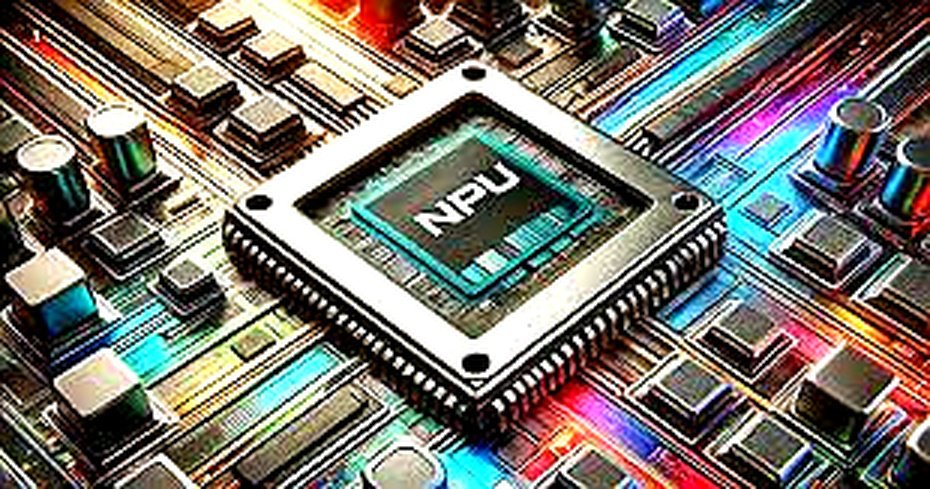
Ceva, Inc. (NASDAQ: CEVA), the leading licensor of silicon and software IP for the smart edge, announced that 2025 marked a breakthrough year for its artificial intelligence ("AI") licensing business, with 10 NeuPro™ neural processing unit ("NPU") agreements signed and with AI contributing more than 20% of annual licensing revenue in 2025.
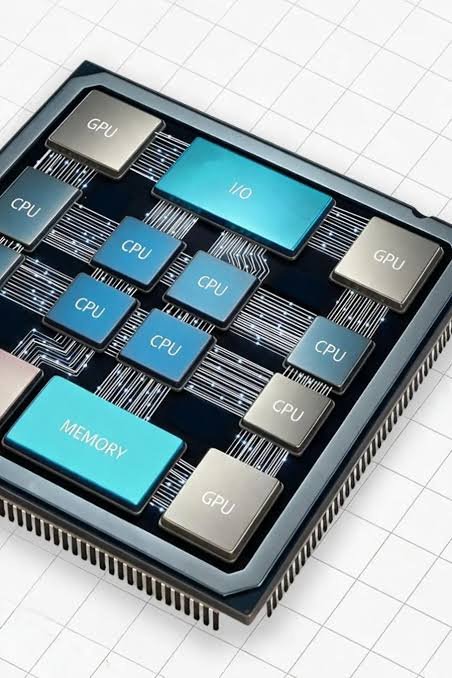
As AI expands beyond the cloud into real-world devices, demand is accelerating for optimized, power-efficient neural processing architectures supporting both edge and hybrid AI models. This shift is driving broader adoption of on-device AI inference across diversified smart edge markets and further positions Ceva as a foundational enabler of Physical AI -- where connectivity, sensing and inference converge inside intelligent devices.
A key highlight of the year was a strategic NPU licensing agreement with one of the world's leading PC original equipment manufacturers, which selected Ceva's high-performance NeuPro NPUs as foundational IP for its next-generation on-device AI compute architecture. This design win validates Ceva's scalable NPU strategy, spanning high-performance architectures deployable across PC, automotive, advanced consumer and other compute-intensive platforms. It also underscores the rising importance of dedicated NPUs as AI capabilities become native to operating systems and applications across devices.
Earlier in the year Ceva achieved another notable highlight, signing a comprehensive NeuPro™ NPU portfolio license with Microchip Technology, one of the world's leading microcontroller and connectivity providers. Under the agreement, Microchip adopted Ceva's NPUs to embed AI capabilities broadly across its product families, reflecting a broader industry trend toward standardizing on proven NPU architectures as AI becomes a core feature across semiconductor platforms. Additional NPU engagements announced during the year included wins with ALi Corp and Nextchip, expanding Ceva's AI footprint across consumer electronics, video platforms, and automotive Advanced Driver Assistance Systems applications.
Throughout 2025, Ceva's NPU licenses spanned both ultra-low-power and high-performance inference, addressing audio, vision, video and multi-sensor AI workloads across consumer, automotive, industrial, PC and infrastructure markets. Several of these NPU wins were with existing high-volume connectivity customers expanding into AI, increasing content per device and strengthening long-term royalty potential. Across all NPU agreements, six customers are expected to have silicon back by the end of 2026, providing increasing visibility into future deployments and royalty ramps as the industry transitions from AI evaluation to deployment.
Complementing its NPU momentum, Ceva also signed multiple AI Digital Signal Processor ("DSP") licensing agreements in 2025 across automotive and consumer markets. These AI DSPs are increasingly deployed alongside NPUs, where they efficiently execute neural networks, perform real-time signal processing, and pre-process data from image sensors and other inputs before inference - particularly in vision, audio and sensor-rich applications. In many cases, these AI deployments are paired with Ceva's connectivity IP, enabling customers to optimize performance, power efficiency and system costs while supporting higher-value, multi-generation royalty streams and strengthening the company's licensing-to-royalty flywheel.
Overall, AI represented more than 20% of Ceva's licensing revenue in 2025, marking a material shift in revenue mix and a significant inflection point for the company's AI business, while establishing a growing base of future AI-related royalties. With an expanding pipeline of AI design wins, multiple customers approaching silicon, and broader adoption across diversified smart edge markets, Ceva expects to build on this momentum in 2026.
Amir Panush, Chief Executive Officer of Ceva, commented: "2025 marked a pivotal year for our AI strategy. The breadth of NPU and AI DSP licenses we signed - from microcontrollers and PCs to automotive and consumer devices - demonstrates that AI at the edge is moving from experimentation to deployment. As AI increasingly shifts into physical devices, the ability to combine connectivity, sensing and inference uniquely positions us to enable the next generation of Physical AI systems across the smart edge."
Forward Looking Statements
This press release contains forward-looking statements that involve risks and uncertainties, as well as assumptions that if they materialize or prove incorrect, could cause the results of Ceva to differ materially from those expressed or implied by such forward-looking statements and assumptions. Forward-looking statements include statements about Ceva's positioning for sustainable future growth and to serve as a foundational technology provider for intelligent, connected devices, licensing agreement wins, future industry demand, our market position for the future, and expectations about future market. The risks, uncertainties and assumptions that could cause differing Ceva results include: the effect of intense industry competition; the ability of Ceva's technologies and products incorporating Ceva's technologies to achieve market acceptance; Ceva's ability to meet changing needs of end-users and evolving market demands; the lengthy sales cycle for IP and related solutions; Ceva's ability to diversify royalty streams and license revenues; geopolitical risks and instability, including the impact of tariffs and other trade measures and potential disruptions related to ongoing conflicts in the Middle East; and general market conditions and other risks relating to Ceva's business and industry, including, but not limited to, those that are described from time to time in our SEC filings. Ceva assumes no obligation to update any forward-looking statements or information, which speak as of their respective dates.