Current Sensing As a Critical Safety Technology for AI Data Centers
02 November 2026 |
Feature | By Mr. Takahisa SHIKAMA & Mr. Takaya HIGA Asahi Kasei Microdevices
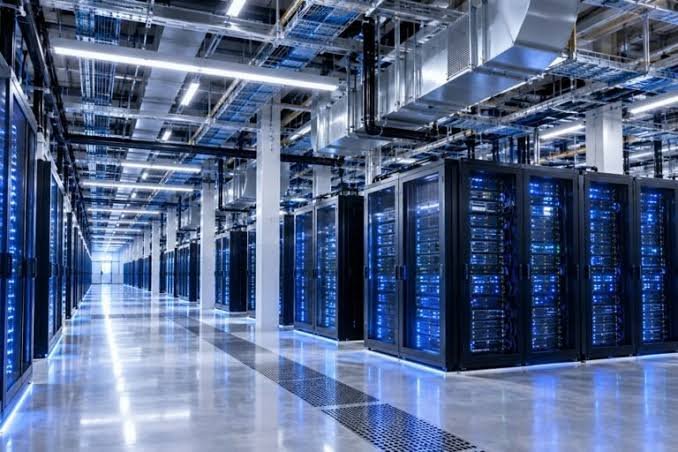
As data center power levels scale from hundreds of kilowatts to multi-megawatt AI clusters, protecting the systems against electrical faults while maintaining uninterrupted operation has become a strategic priority for data center operators.
As data center power levels scale from hundreds of kilowatts to multi-megawatt AI clusters, protecting the systems against electrical faults while maintaining uninterrupted operation has become a strategic priority for data center operators. This raises the requirements against electrical fault protection and for predictive maintenance. Against this background, current sensing is evolving from a mere monitoring function into a critical component for ensuring operational intelligence, reliability, and safety.
The best of both worlds with high-bandwidth current sensors
Historically, current sensing technologies have forced designers to choose between fast fault protection or high-quality measurement data. This trade-off between speed and accuracy is becoming increasingly inacceptable for data center operators.
Traditional power systems typically separate current measurements from protection functions. Current sensors used to provide data for control, energy monitoring, and system diagnostics, while dedicated protection devices such as relays, fuses, or protection circuits responded to fault conditions. In this architecture, measurement and protection operated largely independently.
The transition to Solid-State Circuit Breakers (SSCBs) fundamentally changes this approach. Because semiconductor switches must detect and interrupt fault currents directly, current sensing becomes an integral part of the protection architecture itself.
This dual role of current sensors is becoming increasingly important as AI data centers adopt high-voltage DC (HVDC) power distribution architectures. In DC systems, fault currents can rise rapidly, and, unlike AC systems, there is no natural current zero-crossing that assists interruption. Consequently, SSCBs must identify abnormal conditions based on current waveform information and initiate protection actions within microseconds to prevent damage to semiconductor devices and auxiliary equipment. High-bandwidth current sensing preserves the current waveform information and allows fast and precise protection decisions to be implemented externally using programmable logic.
Beyond fault protection, current data is increasingly being used to monitor transient load conditions, identify abnormal system behavior, support predictive maintenance strategies, and improve overall power system reliability.
100 ns Current Sensor Response for Fast Fault Detection
The performance of fast current interruption and predictive maintenance in an SSCB depends heavily on the quality of the current data captured by the current sensor. Low latency, low noise, high bandwidth, and high accuracy are the key requirements for current sensors to reliably detect electrical faults and shut down the system in time, protecting it from further damage. Furthermore, the same current data used for protection can also support diagnostics, predictive maintenance, digital twins, and software-defined energy management.
Asahi Kasei Microdevices (AKM) develops current sensors based on III-V compound semiconductor Hall elements. By combining high-bandwidth (4MHz) and high-accuracy (0.5% F.S. typ. at - 40 to 125 °C), with fast-response (100 ns) and low noise properties, AKM’s current sensor solutions address the key requirements for SSCBs.
Unlike conventional comparator-based approaches, Asahi Kasei Microdevices’s sensors maintain access to the current waveform itself. This enables protection functions to be implemented externally using FPGAs, DSPs, MCUs, or dedicated protection controllers, allowing designers to create application-specific protection strategies that can evolve through software updates. The same current data used for programmable protection can also support diagnostics, predictive maintenance, digital twins, and software-defined energy management.
Conclusion
Data center operators need protection systems that can simultaneously improve safety, maximize uptime, support predictive maintenance, and adapt to continuously changing operating conditions.
This requirement exposes the long-standing trade-off of conventional current sensing solutions between rapid protection and access to high-quality current information.
Asahi Kasei Microdevices’s high-bandwidth current sensors address this challenge directly by combining nanosecond-level response, MHz-class bandwidth, high accuracy, and low-noise performance with the ability to preserve waveform fidelity. They provide the information required for intelligent protection and data-driven predictive maintenance.