Ceva and Actions Technology Launch Bluetooth HDT Audio SoCs Ahead of Bluetooth 7.0
The new ATS296X series, powered by Ceva-Waves Bluetooth HDT IP, delivers one of the industry's first commercial implementations of Bluetooth High Data Throughput, enabling lossless wireless audio, multichannel sound, and ultra-low-latency connectivity for next-generation audio devices.
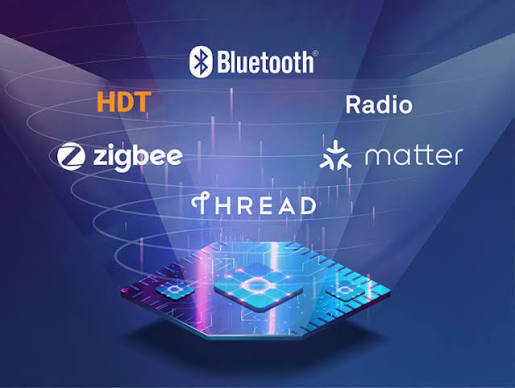
Ceva, Inc. (NASDAQ: CEVA), the leading licensor of silicon and software IP for the Smart Edge, and Actions Technology Co., Ltd. (688049.SH), a leading provider of smart wireless audio and Edge AI SoCs of AIoT, announced the introduction of the Actions Technology ATS296X-series Bluetooth® audio series of chips, powered by the Ceva-Waves™ Bluetooth High Data Throughput (HDT) platform. The new family represents one of the industry's earliest commercial implementations of Bluetooth HDT technology, helping advance the next generation of high-performance wireless audio products.
Bluetooth technology is entering a new era of performance with the introduction of High Data Throughput (HDT), a key feature of the upcoming Bluetooth 7.0 specification. Increasing peak throughput from 2 Mbps to approximately 7.5 Mbps, HDT enables richer wireless experiences including lossless multi-channel audio, ultra-low latency gaming audio, faster file transfers and significantly accelerated over-the-air software updates. Among the categories this natively supports for the first time is multichannel home audio: previous generations of Bluetooth were limited to stereo, whereas HDT's added throughput opens the door to full soundbar systems with wireless satellite speakers and a subwoofer.
The ATS296X-series builds on a long-standing collaboration between Actions and Ceva that spans wireless connectivity and audio processing alike. Actions Technology has licensed Ceva's Audio DSP IP for its audio processing pipelines for many years, and has already delivered more than 100 million wireless audio SoCs integrating Ceva wireless connectivity and sensing technologies. By integrating Ceva's production-ready Bluetooth HDT platform into its latest wireless audio SoC, Actions Technology provides downstream customers with a clear migration path to Bluetooth HDT while enabling lossless audio streaming for an enhanced sound experience, reducing development complexity and accelerating time-to-market for Bluetooth speakers, wireless microphones, multichannel home audio systems and other premium audio products.
"Bluetooth HDT represents the next major evolution of wireless audio, enabling experiences that simply were not possible with previous Bluetooth generations," said Tal Shalev, Vice President and General Manager of the Wireless IoT Business Unit at Ceva. "Our long-standing collaboration with Actions Technology has consistently delivered innovative wireless audio solutions, and the ATS296X series demonstrates that the Bluetooth HDT ecosystem is rapidly moving from specification to commercial products."
Jeffers Gong, General Manager of Portable Audio Business Unit at Actions Technology, said: "Our collaboration with Ceva has enabled us to bring advanced wireless technologies to market quickly and with confidence. Integrating Ceva's Bluetooth HDT platform into the ATS296X-series allows us to offer customers an early path to Bluetooth HDT and a new generation of premium wireless audio experiences. Meanwhile, our proprietary dual-RF design featured on the ATS296X-series delivers highly competitive solutions to fit diverse customer use cases and addresses multi-scenario concurrent operation requirements. "
The Ceva-Waves Bluetooth platform comprises the industry's most comprehensive Bluetooth IP portfolio, including controller, modem, RF and software protocol stack IP. Ahead of the official ratification of the next generation of the Bluetooth Core Specification, Ceva has participated in four industry interoperability (IOP) events, validating its High Data Throughput (HDT) implementation with other leading Bluetooth chipset providers. These efforts help ensure broad ecosystem interoperability as commercial products enter the market while helping mature the specification through multi-vendor interoperability testing. The ATS296X-series is currently undergoing interoperability testing.
Ceva-Waves wireless connectivity IPs and platforms, together with Ceva's Audio DSPs and sensing technologies, reflect the company's strategy of enabling devices to Connect, Sense, and Infer as part of the broader industry shift toward Physical AI. These IPs are deployed in billions of devices worldwide and licensed by leading semiconductor companies serving consumer, industrial, automotive and IoT markets.