BrainChip Named Technology Sponsor for 2025–2026 Raytheon Autonomous Vehicle Competition
Akida™ neuromorphic AI powers next-generation UAV and UGV systems in national university challenge.
BrainChip Holdings Ltd. (ASX: BRN, OTCQX: BRCHF, ADR: BCHPY), the world’s first commercial producer of ultra-low-power, fully digital, event-based neuromorphic AI, announced its role as the official Technology Sponsor for the 2025-2026 Raytheon Autonomous Vehicle Competition (AVC).
The Raytheon AVC, themed “Operation Touchdown,” challenges undergraduate engineering teams from across four United States-based regions—South, Puerto Rico, West Coast, and East Coast—to design and integrate a collaborative system of systems involving at least one Unmanned Aerial Vehicle (UAV) and one Unmanned Ground Vehicle (UGV). Teams must demonstrate fully autonomous navigation, target identification, and collaborative behaviors, including the signature challenge of autonomously landing a UAV on a moving UGV.
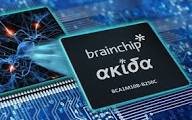
As the competition's core technology provider, BrainChip is requiring participating teams to integrate its advanced neuromorphic semiconductor technology into their systems. Teams will have exclusive access to the Akida™ AKD1000, a low-power Edge AI acceleration processor built on the Akida 1.0 neural network inference processor.
“Supporting STEM education and fostering innovation is at the core of BrainChip’s mission,” said Sean Hehir, CEO of BrainChip. “This competition represents the future of autonomous systems—where power-constrained devices must make intelligent decisions in real-time. We are proud to see our Akida technology driving the cognitive capabilities of the UAVs and UGVs in this year’s challenge.”
To ensure student success, BrainChip is providing the AKD1000 hardware at cost, delivering neuromorphic boards to each university competition team. Furthermore, BrainChip is committing up to 40 hours of virtual engineering support per competition, along with recorded webinars and integration guides, to assist teams in mastering on-chip learning and real-time adaptation to field conditions.
“The Raytheon Autonomous Vehicle Competition is designed to push the boundaries of what university students can achieve in autonomous systems,” said Jesse Lee, Raytheon Autonomous Vehicle Competition Lead. “By incorporating BrainChip’s neuromorphic processors, we are equipping the next generation of engineers with the cutting-edge AI capabilities required to solve real-world defense and disaster response challenges.”
The contest’s United States-based locations and dates:
- South: The University of Texas at Arlington, Texas, April 16-17
- East: George Mason University, Washington, D.C., April 22-24
- West: Santa Barbara City College, California, June 5-6
- Puerto Rico: TBD