VORAGO and wolfSSL Partner to Secure the Next Generation of Satellites
Radiation-hardened chips and built-in cryptography combine to strengthen space missions from launch to orbit.
At SmallSat Symposium 2026, VORAGO Technologies, a radiation-hardened and radiation-tolerant chip provider for space applications, announced a software partnership with wolfSSL, a company specialising in embedded cryptography for secure systems, successfully for the last 20 years. This unique partnership delivers radiation-hardened chips with built-in, standards-based cryptographic security for orbital missions, designed for scale from the start.
At the event, the two companies delivered a joint workshop on cyber and radiation resilience in low-Earth, medium-Earth, and geostationary orbit. This included a demonstration of wolfBoot running on the U.S. government-qualified VA41630 microcontroller.
The silicon-software partnership serves the space industry at a time of growth and change. As space becomes a scaled, investable economy, expectations for the electronics that underpin satellite and aerospace systems are rising. Growing constellations, longer mission lifespans, and increased commercial and national security investment are changing how reliability and cybersecurity are evaluated.
“Space systems are no longer isolated assets designed one at a time,” said Bernd Lienhard, CEO of Vorago Technologies. “When you’re deploying fleets that may operate for a decade or more, reliability and security stop being separate conversations. Our partnership with wolfSSL reflects the reality that resilient hardware and trusted cryptography must be engineered together to fortify microcontrollers in extreme environments and ensure space infrastructure is going to scale responsibly.”
Radiation Protection and Cybersecurity Must Scale Together
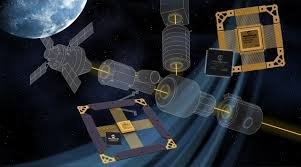
Early space missions were defined by small numbers of high-value assets. Today, satellite constellations are expanding from dozens of nodes to hundreds or thousands, operating in increasingly harsh conditions. In this context, a single weakness—whether caused by radiation-induced faults or insecure communications—can propagate across an entire fleet.
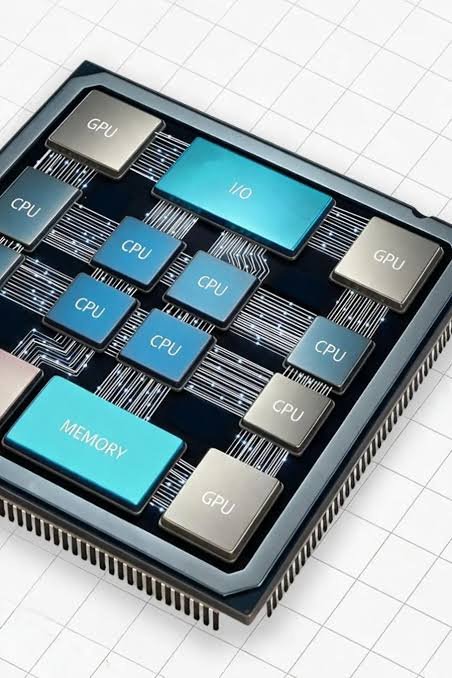
VORAGO and wolfSSL address this shift comprehensively by aligning resilient silicon with cryptographic protections designed for constrained, mission-critical systems. The collaboration supports Vorago’s VA4 family of microcontrollers (Arm® Cortex®-M4 cores layered with HARDSIL® technology), which are built with inherent radiation protection for satellite and aerospace applications. These VA4 MCUs are optimized with wolfBoot secure bootloader and wolfCrypt, the underlying encryption engine. For VORAGO’s VA4 microcontrollers, this provides the root of trust, firmware authentication, and secure Over-the-Air (OTA) updates designed to bridge the gap between cyber and radiation threat, providing full protection for orbital missions.
Designing for Long Missions and Evolving Threats
As space systems become longer-lived infrastructure, security requirements extend well beyond launch. Encryption, secure boot, and data integrity must remain dependable over 10–15-year lifespans and as threat models evolve. wolfSSL contributes embedded cryptography optimised for these constraints, with support for FIPS-certified implementations, long-term validation, and the ability to adapt cryptographic approaches without replacing hardware.
“When cryptography is replicated across an entire constellation, practices that were acceptable for a single spacecraft become systemic risks,” said Todd Ouska, Chief Technology Officer at wolfSSL. “This environment calls for cryptography that’s purpose-built for radiation-proof processors and designed with longevity in mind. By combining our approach to validated, adaptable cryptography with Vorago’s resilient silicon, we’re helping customers scale space systems without scaling exposure.”
Building Trustworthy Infrastructure as Space Expands
By integrating both HARDSIL technology and cryptographic security at the silicon level, VORAGO and wolfSSL are addressing a core challenge of the modern space economy: maintaining trust, safety, and greater environmental protection as systems grow larger, more interconnected, and more economically significant. The collaboration reflects a shared focus on ensuring that as space scales, the reliability and security of its foundational electronics scale with it – while reducing preventable satellite failures that contribute to space debris.