Global Power Electronics Market Set to Grow Rapidly Through 2036
New ResearchAndMarkets.com report forecasts over 8% annual growth, driven by electric vehicles, renewable energy, and data center expansion
"The Global Power Electronics Market 2026-2036" has been added to ResearchAndMarkets.com's offering.
The global power electronics market is projected to grow with a CAGR exceeding 8%, adding over $15 billion by 2030, driven by electric mobility expansion, renewable energy deployment, and digital infrastructure needs.
The Global Power Electronics Market 2026-2036 offers comprehensive analysis of this evolving industry, focusing on the shift to WBG technologies like SiC MOSFETs and GaN HEMTs. The report provides granular 10-year forecasts, examining segments such as EV inverters and data center power supply units. It explores critical technology trends, including the transition to higher voltage EV architectures and the 150mm to 200mm SiC wafer transition.
Regional market analysis covers growth across China, Europe, North America, Japan, South Korea, and emerging markets, while competitive landscape assessment offers market share rankings and M&A activity tracking. The report includes over 90 detailed company profiles, spanning semiconductor manufacturers, GaN specialists, and system integrators.
Power electronics is no longer confined to specialist applications. Its influence now spans electric vehicles, renewable energy systems, industrial automation, data-center infrastructure, and advanced consumer equipment. These sectors share a common objective: enhancing energy efficiency and achieving higher power densities.
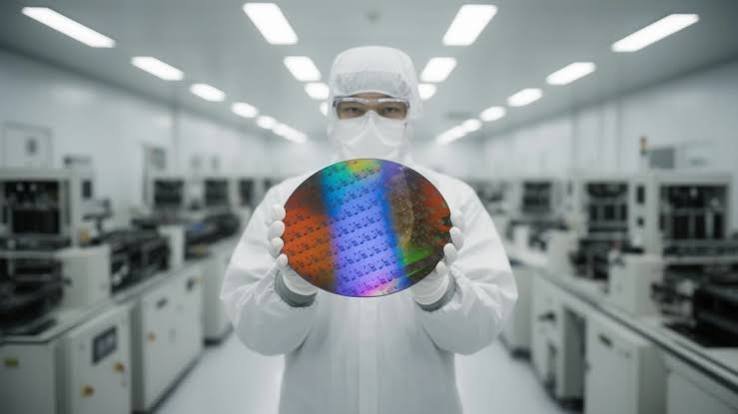
The global power electronics market is witnessing remarkable growth, driven by transportation electrification, renewable energy expansion, and increasing data center infrastructure demand. This dynamic sector involves vital components that convert and control electrical power in various applications, such as electric vehicle powertrains and grid-scale energy storage systems. A significant technological shift is occurring from traditional silicon-based devices to wide bandgap (WBG) semiconductors, particularly silicon carbide (SiC) and gallium nitride (GaN). This shift marks the most substantial advancement in power electronics since the introduction of IGBTs in the 1980s. SiC MOSFETs offer notable advantages, including higher temperature operation, superior thermal conductivity, and faster switching speeds, potentially extending electric vehicle range by up to 7%.
The electric vehicle sector is a major growth driver for power electronics demand. Key components like traction inverters, onboard chargers (OBCs), and DC-DC converters are increasingly adopting 800V architectures, enhancing fast charging and efficiency. SiC MOSFETs are gaining market share in EV inverters, with projections indicating they'll dominate by 2035. GaN devices are making strides in lower-power applications such as onboard chargers, thanks to their high-frequency switching capabilities, leading to reductions in size and weight.
Significant supply chain restructuring is underway, with vertical integration emerging as a strategic trend. Automotive OEMs and semiconductor suppliers secure supply through acquisitions, partnerships, and in-house development of SiC capabilities. The transition from 150mm to 200mm SiC wafers is a critical milestone, enhancing production capacity and reducing costs. Chinese manufacturers have aggressively entered the market, with four ranking among the top 20 global power device suppliers.
Data centers are another rapidly expanding application, propelled by AI workloads demanding unprecedented power levels. Power supply units are evolving to meet stringent efficiency standards, with wide bandgap adoption accelerating. Hybrid designs combining silicon, SiC, and GaN are preferred for maximizing efficiency across various power conversion stages.
The industry is evolving from discrete converter designs to integrated system-level approaches, emphasizing energy management over simple power conversion. "Power Electronics 2.0" incorporates smart grid integration, distributed control architectures, and efficiency metrics. Multi-cell converter architectures are gaining traction, offering advantages like switching frequency multiplication and improved redundancy.
While WBG technologies advance rapidly, silicon devices retain significant market share due to their maturity and cost advantages. The market is highly competitive, especially in price-sensitive segments like solar inverters.