AI Hardware Enters a Supercycle as Global Market Races Toward USD 620 Billion by 2035
Market expected to expand from $31.4 billion to $624.4 billion as demand for advanced AI processing rises
The global AI hardware market is entering a period of unprecedented expansion as artificial intelligence applications move from experimental use cases to large-scale, mission-critical deployments across industries. Market projections indicate the sector could grow from just over USD 30 billion today to more than USD 620 billion by 2035, reflecting the accelerating demand for computing infrastructure capable of supporting increasingly complex AI workloads.
This growth is being driven by the rapid adoption of generative AI, real-time inference, and data-intensive machine learning models that require far greater processing power, speed, and energy efficiency than traditional computing systems can provide. Enterprises across telecommunications, automotive, healthcare, manufacturing, and cloud services are investing heavily in purpose-built AI hardware to meet performance demands while managing power consumption and scalability.
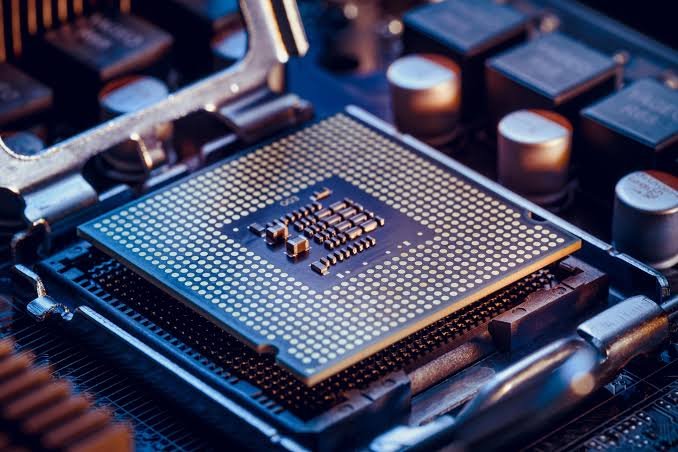
Specialized processors are emerging as a cornerstone of this transformation. AI-optimized CPUs, GPUs, and custom accelerators are increasingly deployed to handle both training and inference tasks, with inference workloads dominating current demand due to their role in real-time applications such as autonomous driving, smart infrastructure, and edge intelligence. At the same time, advancements in memory and storage technologies—particularly non-volatile memory and storage accelerators—are playing a critical role in reducing latency and improving data throughput.
Cloud-based AI infrastructure continues to lead adoption, offering organizations flexible access to high-performance hardware without the burden of large upfront capital investments. However, edge AI is gaining momentum as companies seek to process data closer to its source, driving demand for compact, energy-efficient hardware that can operate within constrained environments such as vehicles, industrial equipment, and consumer devices.
Regionally, North America remains a major hub for AI hardware innovation, supported by strong investment ecosystems and established technology leaders. Meanwhile, Asia is emerging as a high-growth region, propelled by semiconductor manufacturing capabilities, a rising number of AI startups, and expanding enterprise adoption.
As AI becomes deeply embedded in digital infrastructure and everyday operations, the hardware layer is evolving from a supporting component into a strategic differentiator. The pace of innovation suggests that competition in AI hardware will intensify over the coming decade, reshaping supply chains, semiconductor strategies, and the broader technology landscape.