Eulitha Doubles Lithography Equipment Capacity as AI Laser Orders Extend to 2028
The Swiss company is increasing DUV lithography system deliveries for InP DFB laser production, with expanded manufacturing capacity near Zurich expected in early 2027.
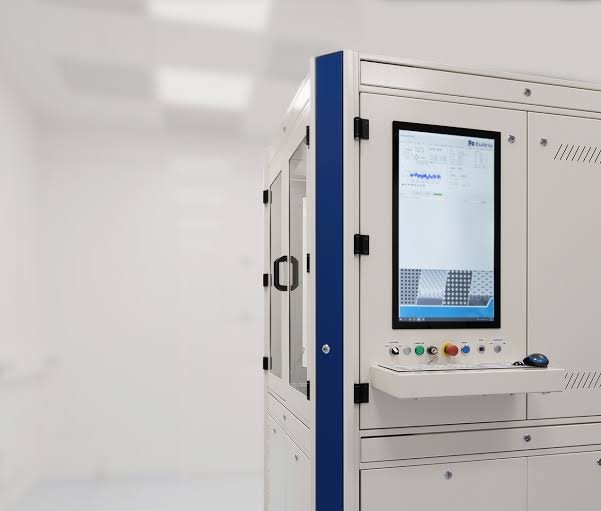
Swiss semiconductor equipment supplier Eulitha AG has increased deliveries of automated lithography systems to foundries producing lasers for AI data centres, as rising demand for optical communications places greater pressure on photonic component manufacturing.
The company announced on that it had delivered multiple deep-ultraviolet (DUV) photolithography systems for the production of indium phosphide (InP) distributed feedback (DFB) lasers.
Eulitha also reported that its existing order backlog is sufficient to occupy its manufacturing capacity until the middle of 2028.
To meet the additional demand, the company is doubling equipment production capacity at its facility near Zurich, Switzerland. The expanded operations are scheduled to begin during the first quarter of 2027.
The announcement reflects growing investment in laser manufacturing equipment as AI infrastructure operators require faster optical connections between processors, memory systems, server racks and data centres.
Eulitha's DUV Technology Targets High-Volume Laser Manufacturing
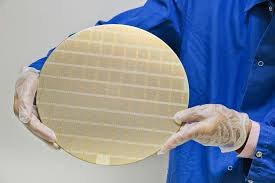
Eulitha's lithography systems use its proprietary Displacement Talbot Lithography (DTL) technology to produce high-resolution patterns on semiconductor wafers.
The process is used to manufacture the fine grating structures required in DFB lasers, which provide precise control over the wavelength of emitted light.
These gratings are important for maintaining stable optical signals in high-speed communications systems.
Manufacturing them requires accurate patterning and consistent processing across wafers, particularly as production volumes increase.
Eulitha's DUV lithography platform provides an alternative to electron-beam lithography, which is also used to create fine semiconductor structures but can face throughput limitations in volume manufacturing.
According to the company, its optical patterning technology allows laser manufacturers to achieve the required resolution and precision while reducing equipment requirements and production costs.
The technology is already being used by several DFB laser manufacturers, with demand increasing substantially since 2025.
AI Data Centres Increase Demand for DFB Lasers
DFB lasers are widely used in optical communications because they can generate stable light at precisely controlled wavelengths.
These characteristics are important for transmitting large volumes of data through optical fibre connections.
As AI systems incorporate more processors and memory devices, communication bandwidth has become an important factor in overall computing performance.
Optical connections are used to move information between computing equipment and across data centre networks, helping operators manage the growing volume of data exchanged between systems.
The development of co-packaged optics (CPO) is also creating opportunities for laser manufacturers and optical component suppliers.
CPO brings optical communication functions closer to computing and networking processors, with the aim of reducing electrical signal losses and power consumption associated with conventional interconnect architectures.
Eulitha expects demand for high-resolution laser manufacturing equipment to increase as optical communication technologies become more widely deployed.
However, the rate of adoption will depend on system design, component availability and the manufacturing costs of optical technologies.
Eulitha Reports Strong Demand from Laser Foundries
Harun Solak, Chief Executive Officer of Eulitha AG, said several DFB manufacturers had been using the company's lithography equipment in production for years, but order volumes had increased sharply since 2025.
He attributed the increase to the expansion of AI data centre infrastructure and the resulting demand for optical communications components.
Solak said Eulitha's photolithography technology could provide manufacturers with the necessary patterning precision and production throughput without requiring large numbers of electron-beam lithography systems.
The company believes this could reduce capital expenditure for manufacturers seeking to expand DFB laser production.
Eulitha has not disclosed the number of systems included in its latest deliveries, the value of its order backlog or the identities of the receiving foundries.
Nevertheless, the reported backlog and planned capacity expansion indicate that the company expects sustained demand for its equipment over the coming years.
Swiss Production Expansion Scheduled for Early 2027
Eulitha is increasing production capacity at its manufacturing location near Zurich to address the growing volume of equipment orders.
The company expects the additional capacity to become operational in the first quarter of 2027.
The expansion will support production of lithography systems for optical communications, while allowing Eulitha to serve other markets requiring high-resolution patterning.
These include augmented reality (AR), virtual reality (VR) and extended reality (XR) devices, where optical waveguides require precisely manufactured micro- and nanostructures.
The company has already expanded its activities in this market.
In January 2026, Eulitha announced that AAC Technologies would adopt its optical lithography technology for volume production of AR waveguides.
The collaboration was intended to support the manufacture of optical components used to direct images into the user's field of vision.
Eulitha's equipment portfolio also supports manufacturing applications involving vertical-cavity surface-emitting lasers (VCSELs), telecommunications gratings and other structured optical components.
Optical Component Manufacturing Gains Importance in Asia
The increase in demand for laser lithography equipment is relevant to semiconductor and photonics manufacturers across Asia, where companies are expanding production of optical devices for data centres, sensing and communications.
In September 2025, Eulitha announced shipments of DUV lithography systems to several Asian foundries producing VCSELs on 6-inch wafers.
Those systems were intended to support applications including LiDAR, three-dimensional sensing and optical communications.
The company's latest DFB laser orders extend its exposure to another segment of semiconductor laser manufacturing.
For Asian photonics foundries, the availability of high-throughput lithography equipment could influence future investment decisions as customers seek larger volumes of optical components.
However, the economics of expanding laser production will depend on wafer yields, equipment utilisation, customer qualification and the cost of manufacturing each device.
Eulitha's planned capacity expansion highlights the growing importance of specialised semiconductor manufacturing equipment in the development of AI infrastructure.
The next milestone will be the commissioning of its additional Swiss production capacity in early 2027, followed by deliveries against its existing order backlog.
For optical component manufacturers, the key question will be whether increasing equipment availability can support the production volumes and cost requirements of future AI data centre networks.