Taiwan Chip Industry Backs Nuclear Power Restart Review Amid Rising Electricity Demand
TSIA, representing TSMC, UMC and other chipmakers, supports the government's nuclear restart assessment as semiconductor production expands, subject to safety and regulatory approval.
Taiwan's semiconductor industry has renewed its support for examining the restart of nuclear power plants, as growing demand for advanced chips raises concerns about the island's long-term electricity supply.
The Taiwan Semiconductor Industry Association (TSIA) confirmed its position at its annual meeting in Hsinchu on 29 October 2026, where its board agreed to back the government's review of nuclear power generation, provided all regulatory and safety requirements are met.
The association represents major semiconductor manufacturers, including Taiwan Semiconductor Manufacturing Company (TSMC), United Microelectronics Corporation (UMC), Vanguard International Semiconductor and Powerchip Semiconductor Manufacturing Corporation (PSMC).
Cliff Hou, Chairman of TSIA and Senior Vice President at TSMC, said reliable electricity remains essential to the industry's continued development. He explained that semiconductor manufacturers have repeatedly urged the government to maintain sufficient power supplies as production capacity increases.
The association's position supports the assessment process rather than the immediate reopening of nuclear facilities.
Advanced Chip Manufacturing Increases Electricity Requirements
Taiwan's semiconductor industry is expanding production to meet demand for AI processors, high-performance computing chips, advanced memory and semiconductor packaging.
These manufacturing activities require substantial amounts of electricity to operate fabrication equipment, cleanrooms, cooling systems and supporting infrastructure.
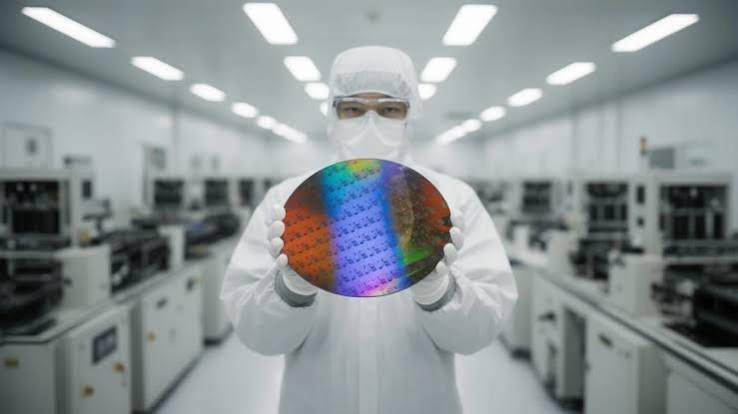
Leading-edge wafer fabrication is particularly energy-intensive because of the large number of manufacturing steps and increasingly complex processing equipment involved.
The expansion of advanced packaging and high-bandwidth memory production is also adding to electricity requirements across the semiconductor supply chain.
Taiwan's electricity planning must therefore account for both existing manufacturing operations and new facilities scheduled to enter production over the coming years.
According to industry projections reported at the TSIA meeting, Taiwan's semiconductor production value could rise 40.9% in 2026 to NT$9.1 trillion (approximately US$280 billion), compared with around NT$6.5 trillion in 2025.
Although production value is not a direct measure of electricity consumption, the forecast illustrates the scale of the industry's expected expansion.
For semiconductor manufacturers, electricity availability and reliability are important considerations when planning new fabrication plants and production investments.
Taiwan Reconsiders Nuclear Power Following 2025 Shutdown
Taiwan ended commercial nuclear electricity generation in May 2025, when the operating licence for the final reactor at the Maanshan Nuclear Power Plant expired.
The closure was part of the government's earlier policy to phase out nuclear generation while increasing the contribution of renewable energy and liquefied natural gas to the electricity supply.
However, growing power requirements from semiconductor manufacturing and other industries have prompted a reassessment of nuclear energy's potential role.
In May 2025, Taiwan's legislature amended the Nuclear Reactor Facilities Regulation Act to allow nuclear power plant operators to apply for extensions beyond the original 40-year operating period.
The change created a legal route for previously closed reactors to be considered for renewed operation, subject to regulatory approval and technical inspections.
In March 2026, state-owned utility Taiwan Power Company (Taipower) submitted a plan to the Nuclear Safety Commission for the possible restart of the Maanshan facility.
The regulator approved the initial restart plan in September, allowing further technical assessments to proceed.
However, the approval does not authorise electricity generation. Taipower must complete additional inspections covering reactor ageing, radiation safety and seismic resistance before seeking renewed operating licences.
Government Sets Safety and Waste Management Conditions
Taiwanese President Lai Ching-te has indicated that the government will consider nuclear power as part of its wider energy planning, provided the necessary conditions are satisfied.
These include nuclear safety, arrangements for radioactive waste management and sufficient public consensus.
The Ministry of Economic Affairs has also stated that any reactor restart must comply with existing legislation and undergo the required technical and regulatory reviews.
The government continues to pursue renewable energy development and improvements in electricity supply reliability alongside its review of nuclear power.
The issue remains politically contested. The opposition Kuomintang supports restoring nuclear generation, while the governing Democratic Progressive Party has historically supported reducing Taiwan's dependence on nuclear power.
The debate also involves questions about long-term waste storage, reactor safety, environmental requirements and the costs of returning older facilities to service.
No decision has been made to resume commercial nuclear generation.
TSIA Calls for Broader Energy Supply Security
The semiconductor industry's concerns extend beyond nuclear power to the reliability of Taiwan's wider energy supply chain.
In April 2026, TSIA called on the government to strengthen strategic reserves of liquefied natural gas and helium, citing supply risks linked to geopolitical tensions and international transport disruptions.
Helium is used in several semiconductor manufacturing processes, while natural gas plays an important role in Taiwan's electricity generation.
The association recommended diversifying international supply sources and improving contingency arrangements to reduce the industry's exposure to disruptions.
TSIA also supported continued investment in renewable energy and improvements in manufacturing energy efficiency.
Its position reflects the need to secure dependable electricity while managing emissions and maintaining access to critical manufacturing materials.
Electricity Supply Becomes a Key Issue for Taiwan's Chipmakers
The discussion over nuclear power comes at a time when Taiwan is expanding its position in advanced semiconductor manufacturing.
TSMC and other chipmakers are investing in new production facilities and packaging technologies to meet demand from global technology companies.
These investments require long-term confidence in the availability of electricity, water, skilled workers and industrial infrastructure.
Power supply interruptions can disrupt sensitive semiconductor manufacturing processes, potentially affecting production schedules and manufacturing yields.
For equipment suppliers, materials manufacturers and semiconductor packaging companies, electricity reliability is also an important factor in factory operations and future investment decisions.
Taiwan's experience highlights the growing connection between semiconductor industrial policy and national energy planning.
The immediate question is whether the government's nuclear safety reviews can establish a viable route for restarting existing facilities.
For chipmakers, the broader concern is ensuring that electricity infrastructure can support manufacturing expansion while meeting cost, reliability and environmental requirements.
The outcome of the nuclear review will therefore be closely watched by Taiwan's semiconductor industry, although any contribution from restarted reactors will depend on further technical assessments, licensing decisions and the time required to return facilities to operation.