China's Chip Manufacturing Expansion Threatens South Korean Memory Margins, PwC Says
Samil PwC warns that China's growing capacity in conventional memory, mature-node foundries and packaging could reshape global semiconductor competition, calling on South Korea to strengthen its high-value chip portfolio.
South Korea's semiconductor industry needs to strengthen its cost competitiveness and move towards higher-value products as China expands its chip manufacturing capacity, according to a new report from Samil PwC, the South Korean member firm of PricewaterhouseCoopers.
Published on 26 October 2026, the report examines how China's semiconductor industry has developed beyond individual technology investments into a manufacturing network supported by government policy, domestic demand, capital investment and an expanding supplier base.
The study, titled The Reality of China's Semiconductor Rise: Challenges for South Korea, warns that Chinese manufacturers could increase competitive pressure in conventional DRAM, NAND flash, mature-node foundry services and semiconductor assembly and packaging.
Although China continues to face technical and commercial challenges in leading-edge manufacturing and high-bandwidth memory (HBM), its growing production capacity could influence global semiconductor supply, pricing and investment decisions.
China Accounts for Over 40% of Global Chip Equipment Investment
According to Samil PwC, China had established a substantial position across several parts of the semiconductor supply chain by 2024.
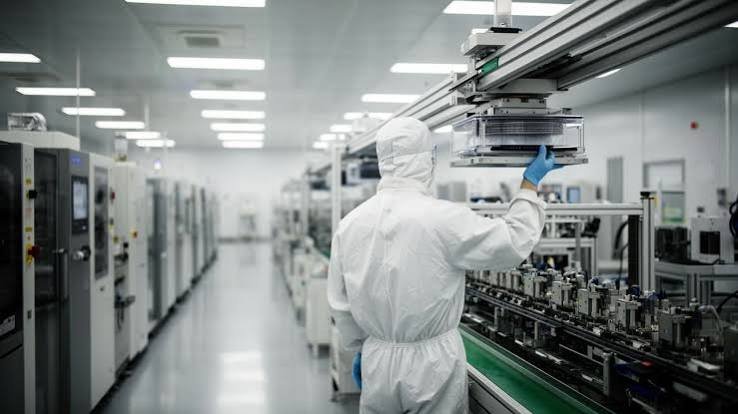
The country accounted for approximately one-third of global electronics production, more than 25% of worldwide foundry manufacturing capacity and over 30% of semiconductor back-end processing capacity.
China also represented more than 40% of global semiconductor equipment investment, reflecting continued spending on manufacturing infrastructure and production capabilities.
The report attributes this expansion to the country's large domestic market, supported by demand from smartphones, electric vehicles, data centres and other electronics-intensive industries.
Chinese semiconductor suppliers can draw on local customers to test products, improve manufacturing processes and build production experience.
This has allowed domestic companies to strengthen their capabilities in areas where manufacturing scale, cost control and consistent product quality are particularly important.
Samil PwC describes the approach as a domestic supply chain strategy in which Chinese manufacturers increasingly serve the requirements of local electronics producers.
However, the report cautions against interpreting China's growing capacity as evidence that it has achieved leadership across every semiconductor technology.
Mature-Node Chips and Commodity Memory Face Greater Competition
The report identifies conventional memory and mature-node semiconductor manufacturing as areas where China's production expansion could have the earliest effect on international markets.
Chinese companies have increased their presence in commodity DRAM, NAND flash, established foundry processes and conventional semiconductor packaging.
These segments already have substantial domestic demand and manufacturing infrastructure, allowing suppliers to increase output as production processes improve.
Additional Chinese capacity could affect the balance between supply and demand, particularly in product categories where customers have several competing suppliers.
For South Korean memory manufacturers, this creates a challenge in maintaining margins while responding to changes in global production volumes and selling prices.
Samil PwC recommends that Korean companies improve manufacturing costs and increase the proportion of higher-value products within their portfolios rather than concentrating primarily on shipment volumes or market share.
Leading-Edge Manufacturing and HBM Remain Difficult
Despite China's progress in established semiconductor technologies, the report identifies several areas where manufacturers still face significant barriers.
In leading-edge logic manufacturing, achieving consistent yields and competitive production costs remains a major requirement.
For HBM, Chinese suppliers must demonstrate that their products can meet customer qualification requirements and support reliable commercial deliveries.
The report also identifies continuing technical limitations in advanced lithography equipment, semiconductor inspection and metrology systems, and certain high-performance materials, including photoresists.
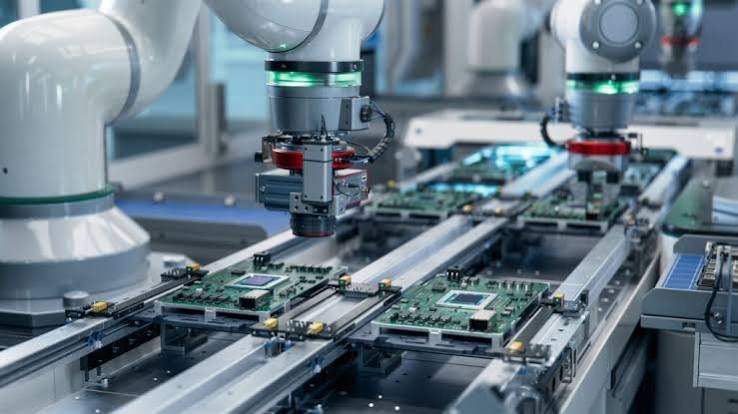
Advanced packaging presents another challenge, particularly in manufacturing complex packages integrating processors and HBM at commercial volumes.
These limitations mean that expanding semiconductor capacity does not necessarily translate into equivalent capabilities across the most advanced manufacturing processes.
For South Korea, Samil PwC recommends continued investment in HBM, specialised memory products, advanced packaging and semiconductor design intellectual property.
The report also calls for closer product development with international customers to ensure that new technologies meet commercial manufacturing requirements.
South Korea Urged to Strengthen Domestic Semiconductor Supply Chain
Beyond investment in individual chip technologies, the report recommends greater support for industries that purchase and use semiconductors.
These include data centres, robotics, autonomous vehicles, advanced manufacturing and computing infrastructure.
Samil PwC argues that a strong domestic customer base can help semiconductor manufacturers improve products through repeated testing, qualification and production.
The study also calls for practical support for South Korean materials, components and equipment suppliers.
Suggested measures include opening manufacturing facilities for product testing, supporting initial purchases of domestically developed equipment and establishing joint qualification programmes.
Such initiatives could help smaller suppliers demonstrate reliability and secure commercial orders rather than remaining dependent on research funding.
PwC Calls for Selective Engagement with China
The report also recommends a more targeted approach to South Korea's semiconductor business relationships with China.
Rather than pursuing broad expansion or withdrawal, Korean companies should assess opportunities according to the technologies involved and their strategic importance.
China's spending on semiconductor manufacturing equipment and materials could continue to provide business opportunities for international suppliers.
At the same time, Samil PwC recommends stronger protection for leading-edge semiconductor technologies, critical design intellectual property and specialist engineering expertise.
Lee Joo-hyung, Semiconductor Sector Leader and Partner at PwC Consulting, said China's semiconductor progress reflects the development of a wider industrial structure in which domestic customers, manufacturing capacity and technology development reinforce one another.
He said South Korea needs to strengthen the connection between semiconductor innovation and the industries that use its products if it is to maintain its competitive position.
Global Chip Supply Could Face Further Pricing Pressure
The report's findings have implications beyond South Korea.
Increasing production of mature-node chips, conventional memory and packaging services in China could create additional supply options for electronics manufacturers across Asia.
For buyers, greater manufacturing capacity may improve sourcing flexibility, although the effect on prices will depend on demand and the pace at which new production becomes commercially available.
For semiconductor suppliers in Taiwan, Japan and Southeast Asia, China's expansion could also affect equipment orders, materials demand, packaging investment and manufacturing partnerships.
Samil PwC's central conclusion is that competition in semiconductors increasingly depends on the relationship between manufacturing capacity, customers, suppliers and technical expertise.
For South Korean chipmakers, the challenge will be to protect profitability in conventional semiconductor markets while sustaining investment in technologies where they retain an established manufacturing advantage.