TASKING and NXP Introduce Unified Software Development Toolchain for S32K5 Automotive Microcontrollers
The integrated toolchain combines compilation, debugging and verification to simplify safety-critical software development, reduce certification complexity and support next-generation zonal architectures and electric vehicle systems.
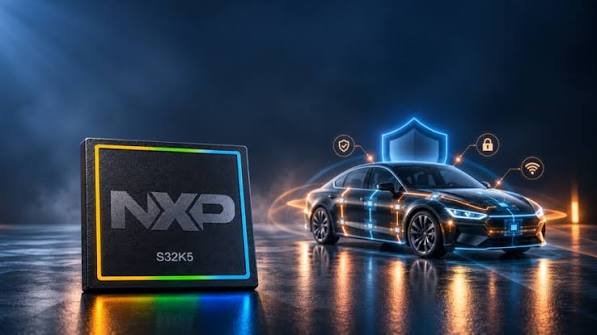
TASKING, a leading provider of embedded software development tools, announced the first and only single-vendor unified toolchain for NXP® Semiconductors’ S32K5 microcontroller family. Developed in close collaboration with NXP, this toolchain brings compilation, debugging, and verification together in one workflow, accelerating development of next-generation zonal architectures and electrification systems while significantly reducing cost, complexity and certification risks.
As the automotive industry transitions to software-defined vehicles (SDVs), toolchain fragmentation introduces real schedule risk, inflates certification effort and complicates software reuse across platform generations. With TASKING’s unified toolchain, automotive software engineers at both OEMs and Tier-1 suppliers now have a single, certified development environment optimised for the S32K5's advanced architecture. This support spans zone controllers, domain controllers, body control modules, chassis and safety controllers, and other demanding safety- and security-critical automotive applications.
"Efficient development of safety-critical automotive software requires a tightly integrated hardware and software environment,” said Paul S. Lee, Senior Director, Automotive MCU Zonal Segment Leader, NXP. “Together with TASKING, we enable efficient software development for next-generation automotive systems with an automotive-grade toolchain that integrates safety-qualified compilation, advanced debugging, DSP acceleration, hardware isolation, and virtualisation support. Customers can scale software more easily, while reducing complexity, costs, and certification risk.”
Unified Toolchain Sets S32K5 Developers Up for the Long Run
Built on years of established debug and test support for NXP products, and following TASKING’s compiler introduction for the S32K3 family, the unified toolchain for the S32K5 now provides an end-to-end workflow for compilation, debugging, and verification for S32K5 developers. The toolchain also includes full support, including out-of-the-box MCAL (microcontroller abstraction layer) certification via NXP's AUTOSAR Real-Time Drivers (RTD).
Other key technical advantages of the TASKING toolchain for the NXP S32K5 family include:
- High software reusability across S32K3 and S32K5: For teams with an existing S32K3 code base, this enables an efficient move to S32K5 without retooling their development environment, helping protect prior investment while reducing migration risk.
- Optimisation for S32K5 hardware: The toolchain is deeply integrated with the S32K5's advanced features, including DSP acceleration, Arm® Cortex®-M7 and hypervisor-enabled Cortex-R52 cores, and hardware isolation mechanisms.
- Safety and security: Developers get highly optimised performance along with ISO 26262 and ISO/SAE 21434 certifications and secure partitioning of mixed-criticality workloads without sacrificing safety or reliability.
- Comprehensive debug solutions: The toolchain provides compiler-aware support for flashing, debugging, and tracing, helping teams reduce friction and gain clarity when isolating and troubleshooting hard-to-diagnose issues.
- Shift-left test capabilities: By combining modern compiler technology, real-time debugging, and automated testing, it helps engineers identify issues, trace requirements, and verify standards compliance earlier in the development cycle.
“By extending our unified toolchain to the S32K5, with full MCAL certification, automotive engineering teams now have a single, certified environment that takes them from first compile to final validation without the integration overhead and certification risk that come with fragmented tools,” said Christoph Herzog, Co-CEO and CTO, TASKING. “For programs running on one of the most capable automotive MCUs available today, this makes a tremendous difference in terms of developer productivity and efficiency. Our ongoing collaboration with NXP made meeting these customer needs a much simpler process.”