EMASS Tapes Out 16nm Ultra-Low-Power Edge AI Chip
New ECS-DoT SoC enters fabrication at TSMC, bringing higher performance without higher power use
EMASS, a Nanoveu subsidiary specialising in next-generation semiconductor technology, announced the successful tape-out of its 16nm ECS-DoT system-on-chip (SoC). The device has entered fabrication at TSMC, marking the transition of EMASS's next-generation ultra-low-power edge AI architecture from final design into production silicon.
The 16nm ECS-DoT represents a process-node and architectural scaling of EMASS's proven 22nm ECS-DoT platform, increasing compute density, memory bandwidth and system integration while preserving the ultra-low-power design principles that define the ECS-DoT family. The move to 16nm enables higher logic density and tighter subsystem integration, supporting more complex always-on workloads within the same constrained power envelopes required at the extreme edge.
The current 22nm ECS-DoT SoC is EMASS's commercially available platform and is actively being designed into customer products today, including applications across wearables, industrial sensors, asset tracking, smart infrastructure and other always-on edge use cases. This in-market traction provides a production-proven foundation for the 16nm ECS-DoT, enabling customers to scale existing designs to higher performance and integration without changing software workflows or system architecture.
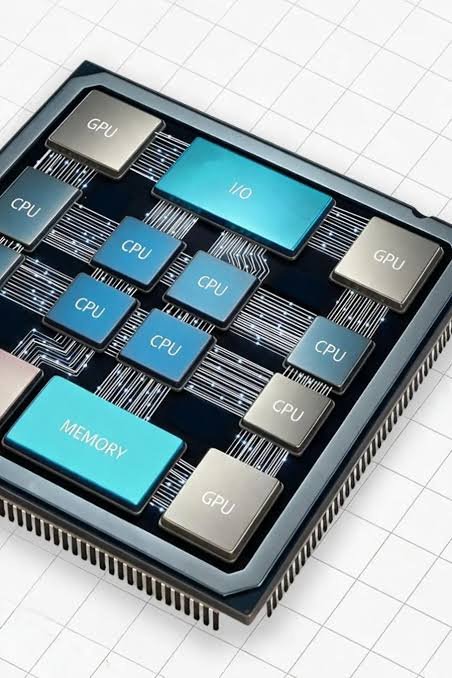
By transitioning to 16nm, EMASS is able to expand on-chip SRAM capacity, integrate additional system-level functions and enhance AI and DSP acceleration without altering the underlying programming model or software toolchain. Wireless connectivity, dedicated AI accelerators and fine-grained power-management blocks are tightly coupled within a single SoC, reducing reliance on external components and enabling continuous, low-latency operation in battery-powered and energy-harvesting edge devices.
"Reaching tape-out confirms that our ultra-low-power edge AI approach scales cleanly to more advanced nodes," shared Mark Goranson, CEO of EMASS. "The 16nm ECS-DoT is not just a faster or smaller device. It's proof that always-on intelligence can move into more demanding applications without breaking power, cost or system constraints."
The 16nm ECS-DoT increases system capability while reducing external component dependency, allowing developers to build more intelligent edge devices with fewer tradeoffs. Key capabilities include:
- Fully integrated BLE subsystem — Eliminates the need for external wireless ICs, reducing board area, bill-of-materials cost and design complexity.
- Expanded on-chip memory — Supports larger AI models and higher-throughput workloads while minimizing off-chip memory access for improved efficiency.
- Adaptive fine-grained power-management architecture — Optimizes energy use for always-on, battery-powered and energy-harvesting applications.
- Dedicated object-detection accelerator — Offloads vision workloads to increase throughput and reduce inference latency for edge vision use cases.
- Integrated floating-point unit (FP16/FP32) — Accelerates DSP and mixed-precision AI workflows while simplifying developer toolchains and code migration.
Despite the move to a 16nm process node, the ECS-DoT architecture maintains full software compatibility across generations. Developers can migrate applications between the 22nm and 16nm devices with minimal changes, preserving existing investments while unlocking additional performance and system headroom. This continuity allows customers to scale functionality and intelligence over time without redesigning platforms or toolchains, accelerating time-to-market for next-generation edge products.
The tape-out of the 16nm ECS-DoT further strengthens EMASS's "Atoms-to-Apps" development philosophy, aligning application needs, algorithm design and silicon implementation into a cohesive system-level approach.
"Tape-out validates years of architectural decisions," said Dr. Mohamed Sabry, founder and CTO of EMASS. "With the 16nm ECS-DoT now in fabrication, we've demonstrated that our architecture can deliver higher integration and capability without sacrificing energy efficiency. This milestone positions EMASS to support a broader range of always-on edge AI applications while staying true to the fundamentals that define our platform."