Sean Dougherty of Everspin Technologies on Strengthening Defense and Aerospace Systems with Advanced MRAM Solutions
14 May 2026 |
Interaction | By Editor Semicon Leader Asia
Sean Dougherty discusses how Everspin Technologies is expanding its role within the U.S. defense ecosystem through advanced Toggle MRAM technology, strategic manufacturing partnerships, and resilient memory solutions designed for mission-critical aerospace and military applications.
In this interview with Semicon Leaders Asia, Sean Dougherty, Vice President of Worldwide Sales at Everspin Technologies, discusses how advanced Toggle MRAM technology is enabling resilient, high-performance memory solutions for next-generation defense and aerospace applications while strengthening trusted domestic semiconductor manufacturing capabilities
What does this agreement represent for Everspin Technologies’s role in supporting the U.S. defense and aerospace ecosystem?
This agreement represents a significant strengthening of Everspin’s role as a strategic partner within the U.S. defense and aerospace ecosystem. As a subcontractor to a U.S. Department of War prime contractor, Everspin is providing advanced Toggle MRAM technology and engineering services to support mission-critical defense programs.
The engagement enables Everspin to share and further develop Mil-Aero Toggle MRAM technology, reinforcing its position as a key enabler of high-reliability memory for aerospace and military systems. It also integrates the company more deeply into the U.S. Defense Industrial Base by delivering both engineering expertise and foundry-level capabilities.
Ultimately, this contract elevates Everspin from a component supplier to a long-term technology and manufacturing partner, advancing U.S. supply chain resilience and next-generation defense innovation.
How will this collaboration with a U.S. prime contractor enhance the development and deployment of advanced MRAM solutions for mission-critical applications?
This collaboration allows us to move beyond supplying memory components to becoming an integrated technology partner within the U.S. defense ecosystem—accelerating the development, qualification, and deployment of Mil-Aero MRAM solutions. By combining our Toggle MRAM expertise with engineering services and close collaboration with a prime contractor, we can align innovation directly with mission requirements and bring advanced capabilities to market faster. At the same time, expanding domestic foundry capacity ensures these solutions can be produced securely and at scale for critical defense applications.
Could you share how your Toggle MRAM technology addresses key requirements such as reliability, longevity, and performance in defense environments?
Everspin’s Toggle MRAM is engineered to meet the strict reliability demands of defense systems by using magnetic storage instead of charge-based memory, eliminating common failure modes like data loss during power interruptions.
It delivers exceptional longevity with non-volatile data retention of up to 20 years and effectively unlimited endurance, ensuring long mission lifecycles without degradation.
From a performance standpoint, it combines SRAM-like speed with Flash-like persistence, enabling fast, deterministic operation for real-time applications.
The technology is also inherently robust for harsh environments, offering radiation tolerance and wide operating temperature ranges critical for aerospace and battlefield use.
Overall, Toggle MRAM uniquely delivers reliability, longevity, and high performance in a single solution—eliminating traditional memory trade-offs for mission-critical defense applications.
How is Everspin Technologies leveraging its manufacturing partnerships, including with Microchip Technology, to strengthen domestic production capabilities?
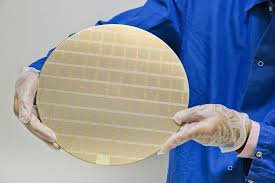
Everspin Technologies has established a 10-year strategic agreement with Microchip Technology to manufacture MRAM and TMR sensors at Microchip’s Gresham, Oregon facility. This partnership provides a critical onshore second source for wafers, utilising Microchip’s to boost domestic capacity. The collaboration ensures ITAR-compliant production, which is essential for meeting the high-reliability requirements of the U.S. aerospace and defense sectors. Everspin retains its proprietary spintronic IP while adopting a foundry services model that allows for significant scaling of its persistent memory roadmap.
What opportunities do you see for expanding partnerships within the defense industrial base as demand for resilient memory solutions grows?
As demand for resilient and trusted memory solutions grows across the defense industrial base, Everspin Technologies has strong opportunities to expand partnerships with defense primes, FPGA vendors, AI processor companies, and trusted semiconductor ecosystem partners. MRAM’s key advantages, including non-volatility, radiation tolerance, instant-on capability, high endurance, and low latency, make it well-suited for aerospace, space, autonomous defense systems, edge AI, and secure communications applications. Everspin’s domestic manufacturing capability also aligns well with U.S. government initiatives focused on trusted and on-shore microelectronics supply chains. Beyond standalone memory devices, the company can drive growth through co-development programs, embedded MRAM (eMRAM) integration, and ecosystem-level partnerships involving FPGAs, ASICs, chiplets, and secure computing platforms. Overall, MRAM is increasingly being viewed as a strategic enabling technology for mission-critical and AI-driven defense systems.
What message would you like to share with customers and industry partners about the future of MRAM technology in defense and aerospace applications?
The future of defence and aerospace systems will depend on resilient, secure, and autonomous computing, and MRAM is well-positioned to play a foundational role in that transformation. At Everspin Technologies, we see MRAM evolving from an alternative memory technology into a strategic enabler for mission-critical applications that require persistence, radiation tolerance, high endurance, and deterministic, low-latency performance. As AI and autonomous capabilities move closer to the edge, traditional memories face growing limitations in reliability, endurance, and power-loss protection that MRAM can address effectively. MRAM’s instant-on capability, non-volatility, and durability make it ideal for aerospace, space, secure communications, electronic warfare, and rad-hard FPGA applications. We also believe the growing focus on trusted domestic semiconductor supply chains creates significant opportunities for deeper collaboration across the defense ecosystem. Our message to customers and partners is that MRAM is becoming a key technology for enabling resilient, AI-driven, and mission-ready defense architectures for the future.