India’s VIHAAN Broadband Chip Achieves First-Pass Silicon Success, Targets 2027 Production
Aheesa Digital Innovations advances its indigenous broadband SoC towards commercialisation, strengthening India’s domestic semiconductor design ecosystem.
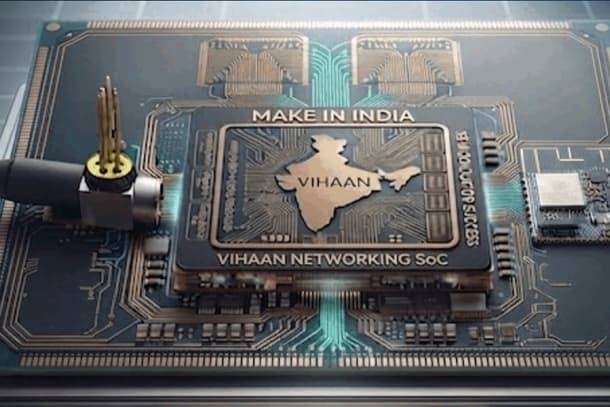
Chennai-based fabless semiconductor startup Aheesa Digital Innovations has achieved first-pass silicon success with VIHAAN, an indigenous networking system-on-chip (SoC) developed for fibre broadband applications. The milestone marks a significant step towards production, with the company targeting a production tape-out in 2027.
VIHAAN is built around the indigenous VEGA microprocessor and is designed to support fibre broadband deployment as India expands its optical-fibre infrastructure and digital connectivity. First-pass silicon success means the chip functioned as intended during its initial silicon validation, reducing the need for another design iteration before progressing towards production.
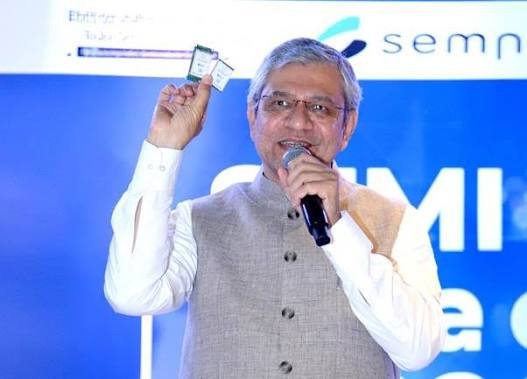
Aheesa taped out the VIHAAN design on 26 January 2026 and achieved first-pass silicon success on 15 August, according to information released by the Ministry of Electronics and Information Technology (MeitY). The company will now move towards the next stage of development, with production tape-out planned for 2027.
Aheesa Advances Indigenous Broadband Silicon
VIHAAN is intended for fibre broadband networks serving homes and businesses. Its development comes as India seeks to strengthen domestic semiconductor capabilities and reduce reliance on imported chips for critical networking and communications equipment.
The project is supported through India's Design Linked Incentive (DLI) Scheme, which is aimed at encouraging domestic semiconductor design and helping Indian companies take chip concepts through design, fabrication and validation.
Aheesa also raised approximately ₹40 crore earlier this year from the Tamil Nadu Infrastructure Fund Management Corporation through the Tamil Nadu Emerging Sector Seed Fund, alongside private investors. The capital is being used to accelerate product development and business expansion.
DLI Programme Expands India’s Chip Design Pipeline
VIHAAN's silicon success is part of a wider expansion in India's semiconductor design ecosystem. According to the government, companies supported through the DLI Scheme have collectively completed more than 30 chip design tape-outs across different foundries and raised more than US$100 million in venture funding.
The programme has also expanded access to chip-design tools, with 455 organisations, including 350 academic institutions and 105 startups, receiving access under government semiconductor initiatives. Separately, 71 academic institutions have completed 245 chip tape-outs through the Chips to Startup programme.
The developments indicate that India's semiconductor strategy is increasingly moving beyond attracting manufacturing facilities towards building domestic intellectual property, chip-design capabilities and product companies.
Production Tape-Out Marks the Next Milestone
For Aheesa, the focus now shifts from successful silicon validation to preparing VIHAAN for production. Reaching the 2027 production tape-out would represent another important stage in taking an Indian-designed broadband SoC towards commercial deployment.
The company's progress also highlights the growing role of Indian semiconductor startups in developing application-specific silicon for telecommunications, automotive, industrial, AI and other markets.
With government-backed programmes providing funding, design infrastructure and access to EDA tools, first-pass successes such as VIHAAN could help strengthen India's domestic semiconductor design ecosystem and create a larger pipeline of locally developed chips for commercial markets.