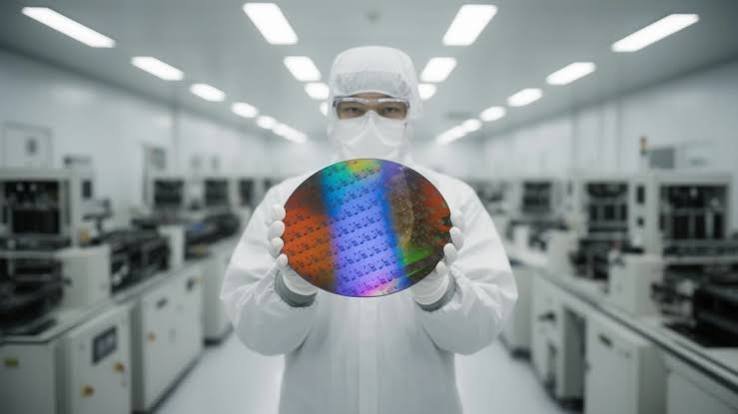
Stathera Raises $55 Million to Scale Silicon Timing Solutions for AI Data Centres
Oversubscribed Series B funding will support mass production of the company’s GEN2 silicon timing portfolio and accelerate development of next-generation timing technology for AI, hyperscale and data centre infrastructure.
Stathera Inc., a fabless semiconductor company pioneering silicon timing solutions, announced the close of an oversubscribed US$55 million Series B financing. As the market consolidates around a dominant incumbent, the round positions Stathera to become the leading independent alternative for AI data centre and hyperscale customers. The round was led by new investor Maverick Silicon with continued backing from existing investors Celesta Capital, BDC Capital, MediaTek Innovation Fund, TXC Corporation, and Ultratech Capital Partners. The financing brings total funding to US$75 million.
Stathera will use the proceeds to fund mass production of its GEN2 silicon timing portfolio while accelerating development of its next-generation platform for AI data centres and growing the company's engineering and commercial teams. With this expansion, Stathera will establish a Silicon Valley office to engage leading AI, data centre, and hyperscale customers.
"Timing is the foundation of modern electronics, and AI has elevated it from a humble component into critical infrastructure," said George Xereas, CEO and co-founder of Stathera. "AI data centre performance is increasingly limited not by raw compute, but by how quickly and coherently data can move and remain synchronised across tens of thousands of processors and the networking connecting them – synchronization that must run on precision timing. For decades, that timing has meant quartz, but Stathera is using semiconductor technology to move this foundational hardware to a new era of silicon. As the silicon timing market has continued consolidating around a single supplier, customers are telling us they want an independent, next-generation alternative. This is exactly what we are building as we scale Stathera's GEN2 silicon timing into mass production today and build our next-gen product, architected from the ground up for AI."
Proven Technology, Scaling to Volume
Stathera's GEN2 32.768 kHz product line, built on the company's proprietary microfabrication technology, is moving into mass production, and its broader GEN2 portfolio is now sampling with Tier 1 OEMs. The 32.768 kHz reference is one of the highest-volume and most demanding sockets in electronics, used in virtually every electronic device, such as smartphones, wearables, and IoT devices, and among the largest opportunities to replace legacy quartz with silicon.
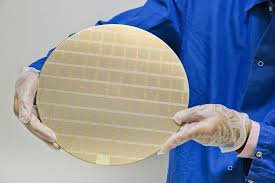
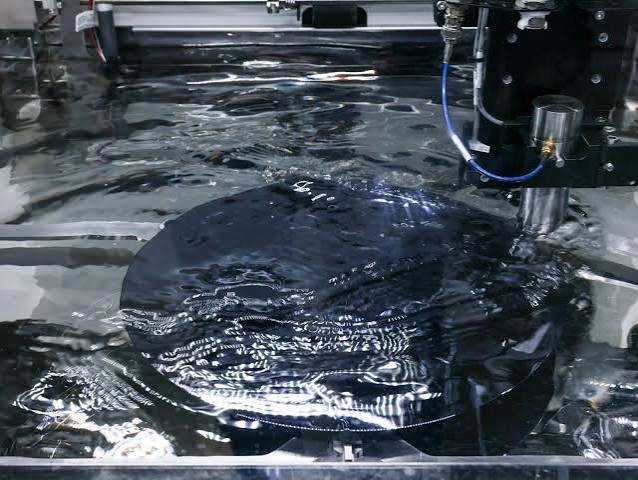
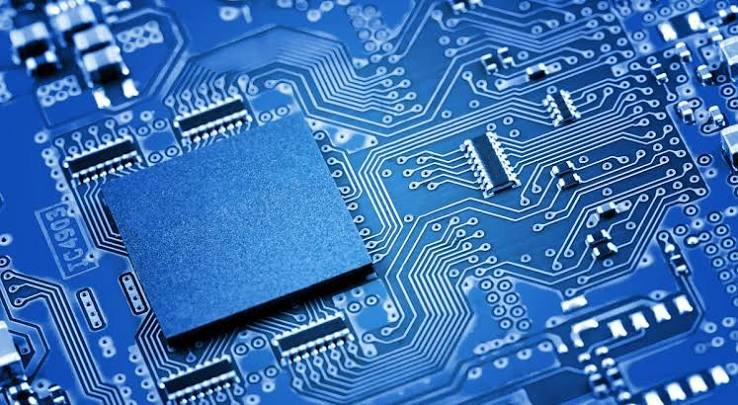
Manufactured in standard semiconductor fabs, Stathera's silicon oscillators replace the quartz crystal with decisive advantages: a footprint up to 85% smaller than the standard SMD quartz package, higher reliability, far greater shock and vibration resilience, and no external load capacitors, giving designers more placement flexibility. The result is high-precision, low-power timing built for the size and battery constraints of modern mobile, wearable, and IoT devices.
Targeting the AI Data Centre Timing Opportunity
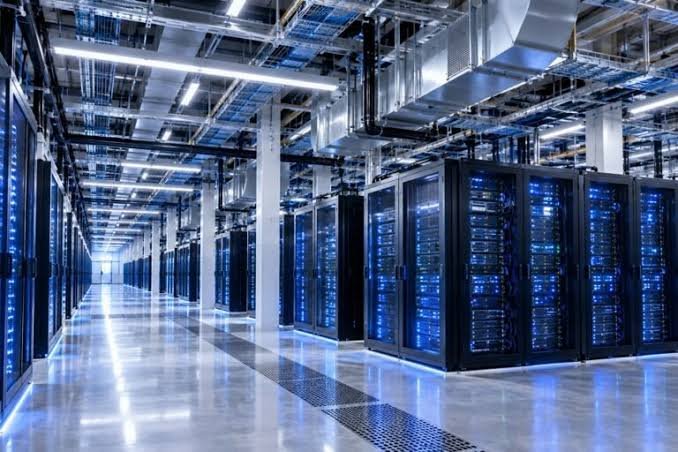
Precision timing has become strategic infrastructure for AI data centres, where synchronisation, jitter, and resilience govern the performance of GPU clusters, networking infrastructure, switches, and optical interconnects. This has made the communications, enterprise, and data centre (CED) segment the fastest-growing category in the US$11 billion annual timing market, and industry estimates put the AI data centre time-synchronisation opportunity alone at a cumulative US$1.5 billion by 2030 as requirements tighten from microseconds toward nanoseconds.
With Series B, Stathera is launching development of its GEN3 platform, a ground-up design based on its proprietary DualMode® architecture and purpose-built for the performance and reliability demands of AI-CED applications. After several years of foundational work and IP development, the company is mobilising a dedicated GEN3 program and targeting first customer samples in 2028.
"Traditional quartz-based timing has powered the electronics industry for decades, but modern AI and edge infrastructure are creating new requirements around size, power, stability, and synchronisation at scale," said Josh Miner, Principal at Maverick Silicon. "MEMS-based timing offers a fundamentally different approach, with advantages in integration, resilience, and programmability. That is what Stathera is building. As timing becomes mission-critical to AI infrastructure, the market needs a next-generation, independent leader. We are proud to lead this round and to partner with George Xereas, CEO and the Stathera team as they scale."
"Silicon-based timing is emerging as a compelling solution to meet the precision and scale that connected systems demand, and for the next generation," said Nicholas Brathwaite, Founding Managing Partner of Celesta Capital. "We're proud to back Stathera and pleased with how far the team has come. Their progress demonstrates clear technical leadership and execution and reflects the strength of Canada's world-class engineering talent and potential for further industry-shifting deep tech investments."