Tim Allemeersch of Qualinx on Advancing Secure GNSS Positioning for the Next Generation of IoT and Connected Devices
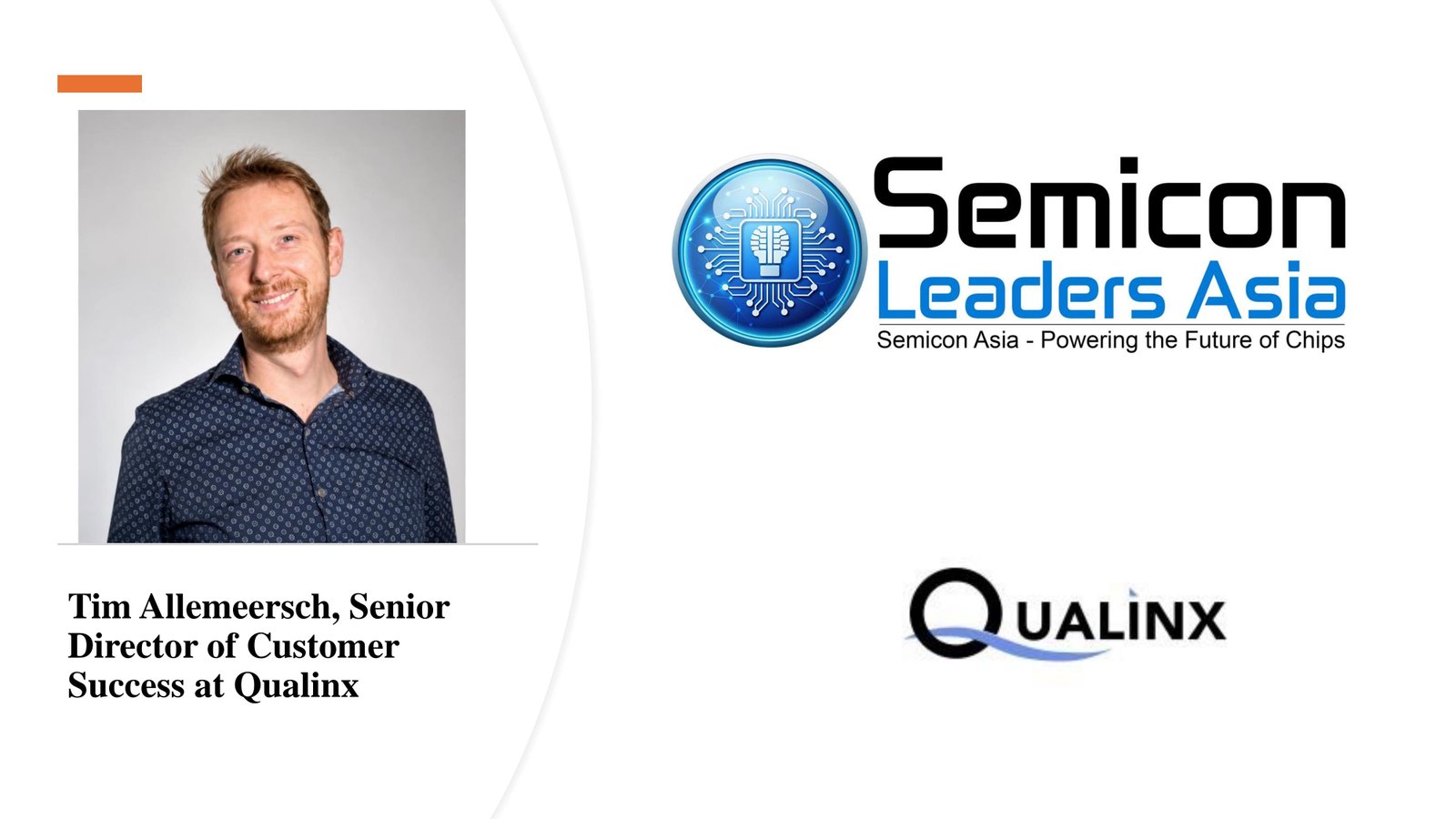
Tim Allemeersch, Senior Director of Customer Success at Qualinx, discusses how ecosystem collaboration, ultra-low-power GNSS technology, and Galileo OSNMA are making authenticated positioning practical for wearables, IoT devices, and asset tracking applications while strengthening resilience against spoofing and cyber threats.
In this interview with Semicon Leaders Asia, Tim Allemeersch, Senior Director of Customer Success at Qualinx, explains how Qualinx is combining ultra-low-power GNSS technology with Galileo OSNMA to bring trusted positioning to mass-market connected devices. He highlights the importance of collaboration across the Galileo ecosystem, secure semiconductor manufacturing, and next-generation positioning technologies that will enable more resilient, energy-efficient, and secure solutions for IoT, wearables, asset tracking, and future connected infrastructure.
Q. Qualinx has worked closely with EUSPA to bring authenticated GNSS to mass-market devices. How important are ecosystem partnerships in accelerating the adoption of secure positioning technologies across the industry?
Ecosystem partnerships are essential as applications and products become increasingly complex, combining multiple hardware and software technologies. Without partnerships, companies would need to develop all components themselves. While that may be feasible in some cases, it significantly delays time to market and often does not make financial sense. In the case of OSNMA specifically, partnerships are indispensable. The capability depends on a complete ecosystem: satellite infrastructure to transmit authentication data, ground systems to manage and distribute secure keys, and receivers to process and verify signals. Building such an end-to-end system independently would require multi-billion-euro investments. Moreover, relying on a single entity to deliver the entire stack introduces considerable supply chain risk. Partnerships distribute expertise, cost, and risk, making large-scale, secure positioning solutions both viable and scalable.
Q. By making OSNMA accessible to wearables, IoT devices and asset trackers, Qualinx is addressing a much broader market opportunity. How do you see customer demand evolving for trusted positioning solutions in these segments?
By enabling OSNMA by default on the Qualinx QLX3Gx, we make it straightforward for product developers to integrate trusted positioning without compromising cost or power consumption. For end users, this translates into greater confidence that their device reliably provides accurate location data, whether it is tracking a bike, car, or pet. As OSNMA expands into wearables, IoT devices, and asset trackers, it adds a crucial layer of robustness that improves reliability and user trust. We expect customer demand for trusted positioning to grow rapidly. Within a few years, secure and authenticated positioning will shift from a differentiator to a standard expectation across these segments.
Q. As concerns around spoofing and signal security continue to grow, how are you working with customers and industry partners to create a more resilient positioning ecosystem?
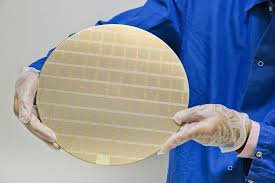
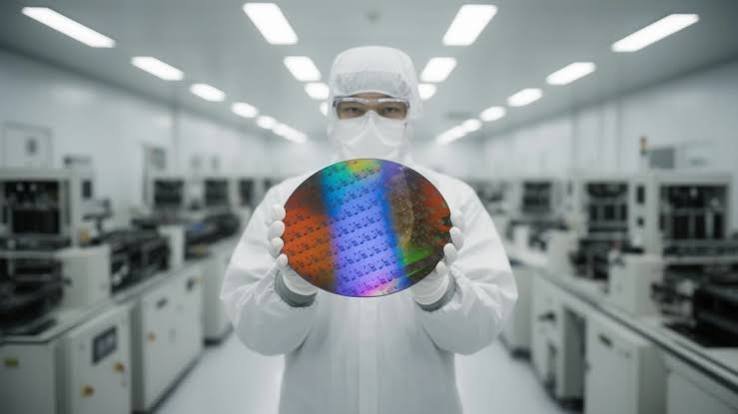
Partnerships are equally critical when it comes to building a resilient supply chain. Even if GNSS chips support OSNMA at the software level, vulnerabilities in the underlying hardware could still compromise the system. That’s why working with trusted supply chain partners is also essential. For example, our collaboration with GlobalFoundries ensures access to a secure semiconductor manufacturing process. This provides a fully European trusted supply chain for wafer production, where sensitive data remains within the European Union. It's an approach that enables Qualinx to deliver a truly end-to-end secure solution, extending beyond software to include hardware integrity as a fundamental component of trusted positioning.
Q. The QLX3Gx opens the door for secure positioning in power-sensitive devices that were previously unable to support authentication features. What new commercial opportunities does this create for OEMs and solution providers?
The integration of OSNMA alongside a secure semiconductor manufacturing flow in the Qualinx QLX3Gx enables OEMs to incorporate trusted positioning as a standard feature, without trade-offs in cost or power consumption. For consumers, this introduces an additional security layer in an environment increasingly shaped by cyber threats. Trusted positioning becomes a reliable “anchor” for devices, enhancing safety and confidence. For OEMs and solution providers, this opens new opportunities to differentiate their products, address emerging security requirements, and unlock new use cases in markets that previously could not support authenticated GNSS due to power constraints.
Q. Qualinx is combining ultra-low-power design with advanced GNSS security capabilities. How does this strengthen your position within the broader IoT and connected-device value chain?
Qualinx’s ultra-low-power QLX3Gx GNSS silicon is transforming the positioning, navigation, and timing market. With power consumption as low as 1 mW—up to 10 times lower than typical alternatives—it significantly extends battery life in wearables and asset-tracking devices. The efficiency is so high that energy harvesting solutions, such as solar cells or even vegetative batteries, become viable power sources. This allows manufacturers to design smaller devices, reduce charging requirements, and lower total cost of ownership. As the industry continues to push for lower power consumption in connected devices, the QLX3Gx positions Qualinx as a leading choice for next-generation designs. The addition of OSNMA further reinforces this position, demonstrating that advanced security can be achieved without sacrificing power efficiency.
Q. Looking ahead, what are your key priorities for working with customers, partners and the wider Galileo ecosystem to drive adoption and unlock new growth opportunities for secure positioning technologies?
Looking ahead, we will continue working closely with EUSPA, the broader Galileo ecosystem, and our customers to expand adoption and drive innovation in secure positioning. Our priorities include increasing the number of connected devices leveraging Galileo services, while actively contributing to the development of next-generation capabilities. These capabilities include improved resilience against jamming and interference, enabling indoor positioning, and the integration of non-terrestrial network (NTN) communications. Through continued collaboration, we aim to accelerate adoption and unlock new growth opportunities for secure, reliable positioning technologies across industries.