Toshiba Electronic Devices & Storage Corporation Launches TXZ+™ Entry-Class M4H Microcontrollers for Consumer and Industrial System Control
New Arm Cortex-M4-based microcontrollers target home appliances, factory automation and industrial equipment with enhanced real-time performance, motor control capabilities and flexible low-power system integration.
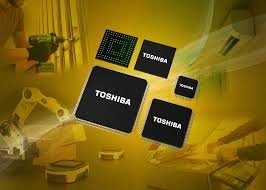
Toshiba Electronic Devices & Storage Corporation (“Toshiba”) has announced the TXZ+™ Family Entry‑Class M4H Group, standard microcontrollers[1] featuring an Arm® Cortex®‑M4 core with a floating-point unit (FPU). The new microcontrollers are designed for application in small‑scale system control of consumer products, such as air conditioners and washing machines, and in industrial equipment, including multifunction printers and factory automation systems. Toshiba is now providing engineering samples of the new products.
As modern consumer products and industrial equipment become increasingly sophisticated and diversified, microcontrollers used in system control must deliver enhanced real‑time capabilities and stability, support ease of design, deliver the versatility necessary for long‑term operation, and be flexible enough to support development of derivative products. Toshiba has addressed these challenges by developing the TXZ+™ Family Entry‑Class M4H Group for system control applications, with an emphasis on versatility.
The new microcontrollers are designed as entry-level products that deliver a set of essential functions. They employ an Arm® Cortex®‑M4 core with an FPU and have a maximum operating frequency of 120MHz—the computing performance and responsiveness required for consumer products and industrial equipment- and they can also handle the core applications of system control, including control logic, interface processing, and timing control.
M4H products support a supply voltage range of 2.7V to 5.5V and, by integrating a high‑speed oscillator with ±1% accuracy, help to reduce external components and improve design flexibility. This suits them for use in consumer products and industrial equipment with 5V power supplies.
The microcontrollers also integrate essential peripheral functions for system control, including a 12‑bit analog‑to‑digital converter (ADC), timers, universal asynchronous receiver/transmitter (UART), serial peripheral interface (SPI), inter‑integrated circuit (I²C[2]), and direct memory access (DMA[3]). An additional feature is an advanced programmable motor driver (A‑PMD) that supports brushless DC motor control, ensuring flexible use in line with application requirements and system configurations.
Toshiba supports device evaluation and review with the provision of engineering samples and a development environment. The company also supports smooth progress from initial evaluation to application development by providing starter kits, sample software, CMSIS[4]-compliant drivers, and user environments for major IDEs [5].
Applications
- System control units for home appliances and consumer equipment
- Industrial equipment and factory automation (FA) systems
- Office and commercial equipment
Features
- Arm® Cortex®‑M4 core with FPU: operating 120MHz (max)
- Supply voltage range: 2.7V to 5.5V
- Internal memory
Code flash memory: 256 KB
RAM: 18 KB
- Self-diagnosis functions for functional safety
- Three types of packages, selectable according to mounting area and assembly conditions