Ventiva Unveils Zoned Cooling™ Architecture at CES 2026
New thermal design delivers targeted, fanless cooling for AI laptops, edge devices, and data centres
Ventiva®, a leader in thermal solutions, at CES 2026 unveiled its Zoned Cooling™ reference design, a new architectural approach to thermal management that transforms how heat is managed in electronic devices, from laptops to client-edge devices to data center infrastructure. As AI workloads grow, requiring more compute power, memory, storage, and 24/7 responsiveness, traditional fan-based cooling solutions are reaching their limits. Ventiva’s Zoned Cooling design delivers a modular, spatially efficient, and cost-saving alternative that meets the demands of the AI era.
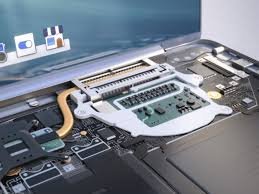
Ventiva is showcasing its Zoned Cooling reference design with an AI-ready laptop, demonstrating how it transforms thermal performance in next-generation electronic systems. The platform shows how OEMs and ODMs can reclaim valuable motherboard space, simplify system construction, reduce total cost of ownership, and deliver thinner, quieter devices, without compromising performance.
A New Thermal Management Approach Built for AI
AI is fundamentally changing system architecture: large language models (LLMs), higher sustained workloads, and increased on-device inference are generating concentrated heat that conventional fan-based cooling solutions cannot efficiently address. For decades, thermal design has relied on a centralized approach that moves air broadly through the chassis, regardless of where cooling is actually needed. Ventiva’s new Zoned Cooling design changes that model by enabling airflow and cooling capacity to be directed precisely to the components that generate the most heat - such as CPUs, GPUs, and AI accelerators - delivering targeted, efficient cooling where it matters most.
“Our Zoned Cooling approach to thermal management represents a meaningful step forward in system design,” said Carl Schlachte, Chairman, President, and CEO, Ventiva. “By cooling only where it’s needed, designers can reclaim valuable motherboard space, simplify internal layouts, and reduce reliance on bulky mechanical components, enabling thinner, quieter devices with fewer tradeoffs while still meeting the thermal demands of AI workloads.”
Laptops & Client-Side Edge Devices
With increased AI and graphics processing capabilities, laptops and edge devices are shifting from traditional computing devices to powerful AI-driven machines. However, mechanical fans have reached their limits in both performance and form factor adaptability. In addition, they create excessive noise and vibrations that can cause distractions.
For laptop computers, a Zoned Cooling design positions all cooling vents at the rear of the device and replaces bulky mechanical fans with Ventiva’s thermal management subsystem. This is a long-overdue evolution in laptop architecture that gives system designers the freedom to innovate and opens a path to ultra-thin or newly imagined form factors that are optimized AI laptop designs:
- Up to 7,200 mm² of reclaimed motherboard real estate returned to system designers for additional memory, storage, larger batteries, or new components
- Lower system cost through simplified construction and reduced inventory requirements
- Lower total cost of ownership with modular, scalable thermal components
- Thinner, quieter, high-performance designs ideal for AI workloads
Ventiva’s AI-Ready Laptop reference design, powered by three 62mm Ventiva modules, supports a 28W CPU and 44.3W total platform power in a sub-16mm chassis. The design accommodates up to a 77 Whr battery, full 2280 SSD support, and Microsoft Copilot+ readiness. The parallel Ventiva array and rear-edge venting reduce impedance, increase cooling efficiency, and create a scalable thermal pathway for future systems.
Data Center Systems
As AI workloads surge, data centers face mounting performance challenges. Traditional fan-based cooling solutions are inefficient: in a 1U server rack, only 25 percent of airflow reaches the compute components, while the remaining 75 percent is used to remove heat. Also, the airflow is uneven, which can lead to localized overheating and performance throttling, where processors slow down to avoid overheating.
In high-density environments, a Zoned Cooling design brings precision cooling to the components that create the most heat, e.g., CPUs, GPUs, NPUs, etc.
- Localized cooling can save up to 5% of a server’s overall power budget
- By reducing hotspots and throttling, servers maintain peak performance for AI workloads
- Lower sustained temperatures reduce thermal stress, protecting critical components
Ventiva’s ionic cooling technology delivers micro-channeled airflow that efficiently directs cooling to emerging board hot spots such as memory, storage, and more. It frees valuable chassis space, improving rack density and system design breakthroughs, and is an augmentative cooling solution for hybrid, liquid solutions in data centers.
“AI is rewriting the rules of system design, and thermal architecture is now a first-order design requirement,” added Schlachte. “Our Zoned Cooling design gives designers back the space, efficiency, and flexibility they’ve been losing to traditional cooling methods. It shows what becomes possible when cooling is no longer the limiting factor, and this approach scales from laptops all the way to data centers.”
Ventiva’s ionic cooling technology is a foundational enabler of Zoned Cooling designs and makes zone-based airflow control practical across consumer, enterprise, and data center deployments. More information is available in the white paper, Zoned Cooling: Unlocking a New Era of System Design Freedom.