Rocket One and VCU Partner to Advance SKYMRAM Magnetic Memory Technology
The one-year programme will test nanoscale fabrication, materials and switching behaviour as Rocket One evaluates the technology for future AI, space and defence applications.
Rocket One Inc. (Nasdaq: RKTO) ("Rocket One" or the "Company") announced that it has executed a sponsored research agreement with Virginia Commonwealth University (VCU) to advance SKYMRAM, a skyrmion-based magnetic memory technology with potential applications in next-generation AI chips and computing systems.
The agreement establishes a one-year research program scheduled to begin November 1, 2026. The work will focus on nanoscale fabrication, materials optimization, and device-level testing toward a critical proof-of-concept milestone: demonstrating switching of SKYMRAM's soft magnetic layer.
For Rocket One, the agreement establishes a defined experimental development program supporting its broader strategy to pursue advanced semiconductor technologies for AI infrastructure, space, and defense applications.
"Building the next generation of AI computing requires advances in the underlying hardware, including how information is stored and switched," said Robb Knie, Chief Executive Officer of Rocket One. "This agreement establishes a concrete development path for SKYMRAM, with fabrication, characterization and switching milestones designed to test the technology at the device level. Our goal is to build the technical foundation for future chip architectures serving AI infrastructure, space, and defense."
Advancing the Building Blocks of Future AI Chips
SKYMRAM research uses skyrmions—nanoscale magnetic structures—as the basis for a proposed magnetic memory architecture. The program will investigate the material structures and switching behavior needed to advance this approach toward future semiconductor applications.
The planned work includes:
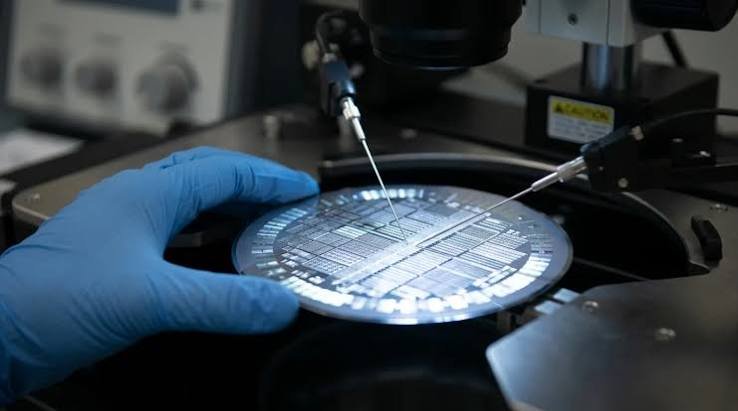
- Nanoscale device fabrication: Patterning, etching, and characterizing magnetic material stacks designed to host skyrmions.
- Materials engineering: Developing and refining thin-film structures to support device testing.
- Switching studies: Investigating control of the soft magnetic layer, a central proof-of-concept objective.
- Device optimization: Refining structures to host skyrmions approximately 100 nanometers in size and pursuing reliable switching within the planned experimental framework.
VCU will lead the project under Principal Investigator Jayasimha Atulasimha. The agreement also provides for a Northwestern University subaward supporting thin-film growth, materials characterization and optimization, with feedback between materials development and device measurements.
A Defined Development Path for Advanced Semiconductor Technology
The program establishes quarterly objectives progressing from initial material-stack fabrication and characterization to switching studies and optimized nanoscale structures.
These experiments are intended to generate evidence needed to assess SKYMRAM's technical feasibility and guide subsequent development. The program represents foundational memory-device research supporting potential future AI chip architectures; it does not establish completed AI processors or validated system-level performance.
Rocket One views advanced magnetic memory as a potential component of its long-term computing strategy. Applications in AI infrastructure, space and defense would require further development and application-specific validation, including any testing needed to establish radiation tolerance.
The agreement also provides Rocket One with an option to negotiate licenses to intellectual property arising from the project, subject to its terms.