Aehr Secures $6 Million AI Chip Burn-In Order from Hyperscale Customer
Aehr Test Systems has received approximately $6 million in follow-on orders for its Sonoma platform, expanding production capacity for a hyperscale customer's next-generation AI processor ahead of a planned 2027 volume ramp.
Aehr Test Systems has secured around $6 million in additional production orders from its lead hyperscale customer for package-level burn-in of a next-generation artificial intelligence processor designed for data centre training and inference workloads.
The orders cover additional Sonoma high-power package-level test and burn-in systems, turnkey burn-in modules, device-specific sockets and upgrades to production software. The equipment and related consumables will be installed at one of the customer's outsourced semiconductor assembly and test, or OSAT, partners in Taiwan, with deliveries scheduled over the next six months.
The processor is the second AI device from the unnamed hyperscale customer to use Aehr's Sonoma platform for production burn-in. The latest investment will increase testing capacity before the chip is expected to move into a broader production ramp during calendar year 2027.
According to Aehr, the customer expects production volumes for the second-generation processor eventually to exceed those of its first AI device supported by Sonoma. The earlier processor is already in high-volume production, with output expected to increase further as additional testing capacity comes online.
Gayn Erickson, President and Chief Executive Officer of Aehr Test Systems, said the follow-on orders reflected the customer's growing use of the Sonoma platform across successive generations of increasingly powerful AI processors. Aehr also sees the potential for further demand for systems and device-specific consumables as production volumes increase.
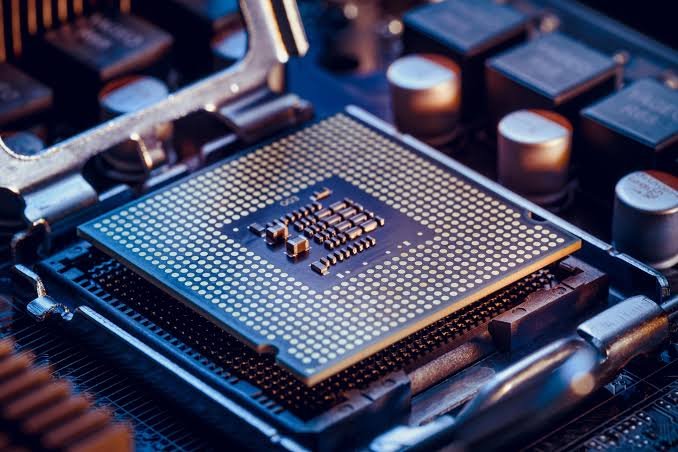
The next-generation processor places greater demands on semiconductor testing because different areas within the package require independent temperature control during burn-in. Aehr's Sonoma platform provides multi-zone thermal management while supplying the high electrical current needed to stress advanced processors and identify early-life failures.
The system can also monitor multiple devices or functional elements inside a multi-chip package independently. Such capabilities are becoming increasingly important as advanced AI packages integrate compute dies, high-bandwidth memory and interface components, each with different power and thermal characteristics.
Aehr is also discussing testing requirements for future, larger and higher-power AI devices with the same customer. Those discussions cover both the Sonoma package-level burn-in platform and Aehr's FOX-XP wafer-level burn-in system.
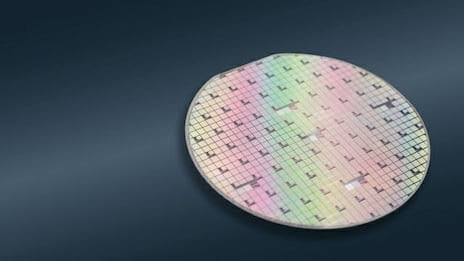
The company's ability to provide testing at both wafer and package level could become increasingly relevant as the value and complexity of AI processors rise. Wafer-level testing can identify defective dies before they enter expensive advanced packaging processes, while package-level burn-in can assess the reliability of the completed device.
For Taiwan's semiconductor ecosystem, the order also highlights how accelerating AI processor production is creating opportunities beyond leading-edge wafer fabrication. OSAT providers, testing equipment suppliers and advanced packaging companies are increasingly important to ensuring that high-value AI processors can be qualified and scaled reliably for data centre deployment.