BrainChip Launches AKD1500 PCIe Card for Low-Power Neuromorphic Edge AI
New development card enables engineers to evaluate event-based AI on standard computing platforms, supporting a path from application development to M.2 modules, silicon and licensable Akida IP.
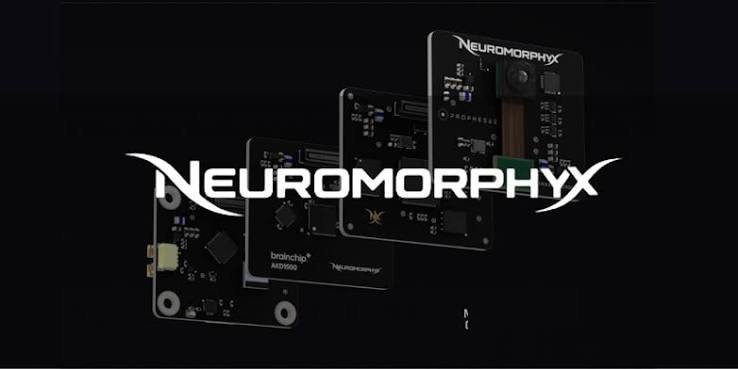
BrainChip Holdings Ltd has launched the AKD1500 PCIe development card, giving engineering teams a new way to evaluate ultra-low-power, event-based neuromorphic AI across standard computing platforms.
The new PCIe card is built around BrainChip's AKD1500 Edge AI co-processor and can be installed into a standard PCIe slot in a desktop, workstation, industrial PC or single-board computer. The company said developers can run models created using existing frameworks and validate their own edge AI applications using their own streaming data.
The launch expands the range of formats in which BrainChip's AKD1500 technology is available. Alongside the PCIe development card, the company offers the AKD1500 as a deployable M.2 module, packaged and unpackaged silicon, as well as Akida intellectual property (IP) that chip designers can license for custom applications.
Supporting the path from evaluation to deployment
BrainChip said the PCIe card is designed to simplify the process of moving from early-stage evaluation to product development. Models validated on the development card can subsequently run on deployed hardware without requiring changes to the model.
“Our customers no longer have to choose between proving out neuromorphic AI and productising it,” said Sean Hehir, CEO of BrainChip. “Akida is available in every form they need — from card to IP — turning a technology into a complete roadmap for adoption.”
Steve Brightfield, Chief Product Officer at BrainChip, said access to silicon and development tools remains an important consideration when evaluating new AI architectures. He added that the PCIe card allows developers with a compatible PC to test their own models on Akida and carry that development work through to a module, chip or IP-based implementation.
Growing focus on low-power edge AI
The launch comes as edge AI adoption expands across applications including industrial sensors, cameras, robotics and wearables. BrainChip highlighted the growing requirement for AI processing that can operate with low power consumption, without relying on fans or continuous cloud connectivity.
The company has also recently expanded the AKD1500 portfolio with its M.2 module, which provides a compact, plug-and-play option for adding on-device AI capabilities to industrial and commercial systems.
At Embedded World North America 2026, BrainChip demonstrated AKD1500-based applications including radar classification, human presence detection and fall detection, highlighting the chip's use in real-time, battery-powered edge AI applications.
Available for developers
The AKD1500 PCIe card is now available for purchase through BrainChip's online store. The company said its development tools and model library are available without subscription or licensing fees, providing developers with access to the resources needed to evaluate Akida-based edge AI applications.
The launch further broadens BrainChip's hardware and IP offering, giving developers and system designers multiple routes to evaluate and integrate its neuromorphic AI technology across edge computing applications.