Thermo Fisher Introduces EMPAD G2 for High-Speed 4D STEM Semiconductor Analysis
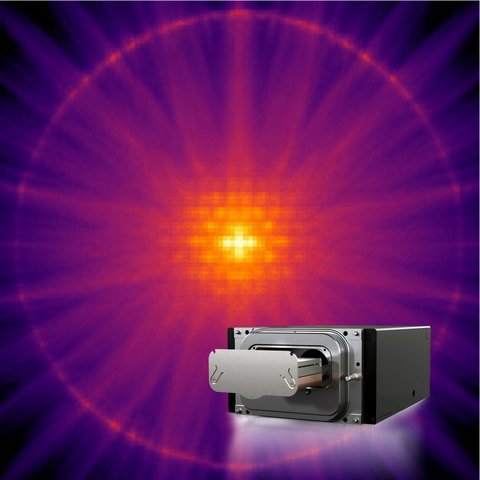
New detector delivers 10,000 frames-per-second imaging and high dynamic range to help semiconductor researchers characterize materials, strain and device structures with greater speed and detail.
New detector enables faster 4D STEM imaging, helping researchers uncover material properties with greater speed and detail
Key highlights:
- Innovation: EMPAD G2 helps researchers capture more information about materials in a single scan, recording both the strongest and weakest signals without sacrificing imaging speed or data quality.
- Performance: EMPAD G2 runs at 10,000 frames per second (0.1 ms/frame), with exceptionally high single-frame dynamic range (>10⁷), single-electron sensitivity and operation across the full 30–300 kV range.
- Workflow: EMPAD G2 is fully integrated with Thermo Scientific™ Velox™ software, enabling researchers to collect and analyze 4D STEM and EDS data in a single workflow for faster, more reliable materials characterization.
Thermo Fisher Scientific Inc., the world leader in serving science, introduced the Thermo Scientific™ EMPAD™ G2 detector, a new detector designed to help researchers see and understand materials in unprecedented detail.
EMPAD G2 enables high-speed four-dimensional scanning transmission electron microscopy (4D STEM), an advanced form of electron microscopy that captures far more information about a material than a standard image, helping researchers better understand its structure and properties.
“The EMPAD G2 gives scientists a deeper view of materials and the information they need to explore what those materials can do,” said Glyn Davies, president, materials and structural analysis, Thermo Fisher Scientific. “By making advanced 4D STEM faster, more reliable and easier to use, we can help researchers accelerate discoveries in areas such as semiconductors, energy and advanced materials — and ultimately enable new technologies that can improve our everyday lives.”
Capturing weaker signals alongside stronger ones can help researchers measure characteristics, including a material’s structure, chemistry, strain and electric and magnetic properties in a single experiment. EMPAD G2 supports advanced applications, ranging from strain mapping and differential phase contrast (DPC) to multi-slice electron ptychography for three-dimensional characterization at the atomic scale.
As 4D STEM becomes more widely used in academic and industrial research, detector performance is increasingly important. Researchers need to capture large amounts of information quickly while accurately measuring signals that can range from extremely strong to extremely weak. EMPAD G2 is designed specifically to meet these demands and help researchers get reliable quantitative information from a single acquisition.
According to David Muller, Ph.D., Samuel B. Eckert Professor of Engineering at the School of Applied and Engineering Physics at Cornell University, this new technology represents an important milestone for scanning transmission electron microscopy. “The EMPAD G2 project gave us a unique opportunity to design a detector specifically optimized for STEM, rather than TEM or x-ray imaging,” said Muller.
EMPAD G2 is also fully integrated with the user-friendly Thermo Scientific Velox software. Researchers can collect and analyze multiple types of data, including simultaneous 4D STEM and energy-dispersive x-ray spectroscopy (EDS) within a single workflow. This integration helps simplify advanced materials analysis and supports more reliable, repeatable results.