POLYN Partners with ALTER TECHNOLOGY France to Accelerate Neuromorphic AI Chip Commercialisation
21 July 2026 |
Interaction
POLYN discusses its semiconductor validation strategy, NASP technology roadmap, edge AI growth and plans to expand into automotive, industrial automation and Physical AI markets.
Alexander Simin, COO of POLYN Technology, speaks exclusively with Semicon Leaders Asia about the company's partnership with ALTER TECHNOLOGY France, the commercialisation of its neuromorphic AI technology, and its vision for advancing edge AI, automotive innovation and the future of Physical AI.
Q1. How does this partnership with ALTER TECHNOLOGY France strengthen POLYN’s commercialisation strategy and accelerate the path towards large-scale deployment of NASP technology?
The joint lab partnership gives POLYN direct access to an internationally recognised test environment with specialised electrical validation capabilities, built on ALTER France’s long-standing expertise in high-reliability sectors. This significantly shortens the characterisation and validation cycles for POLYN products and reference designs, which is exactly the phase that gates the transition from engineering silicon to volume manufacturing.
By working with ALTER France, POLYN can formalise its validation processes and provide customers with stronger technical evidence. This helps reduce integration risk for potential adopters and creates a clearer path from initial evaluation and prototyping to qualification and volume deployment.
Q2. Validation plays a critical role in customer adoption of new semiconductor technologies. How will the joint validation lab help build confidence among customers and ecosystem partners?
Analog neuromorphic computing is a genuinely novel architecture, and new approaches are needed to demonstrate the functional correctness, robustness, fault tolerance, and time-deterministic operation of neural networks implemented on NASP chips.
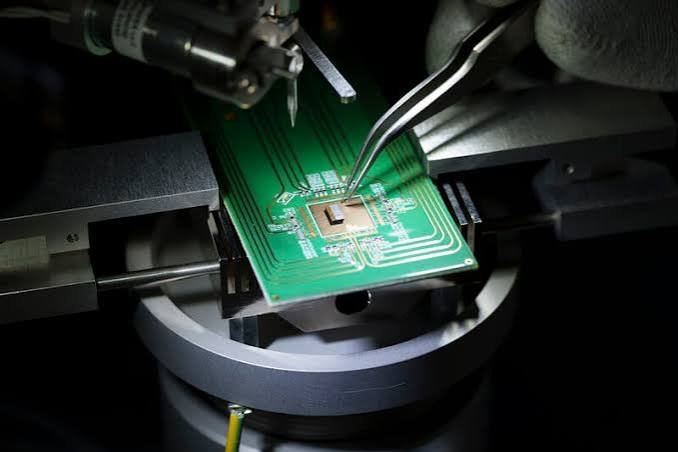
The joint lab enables systematic validation of IC performance under application-relevant conditions, using the proven methodologies of an independent, internationally renowned test house — a TÜV NORD company. For customers and partners, that means NASP performance claims are backed by rigorous, third-party characterisation data rather than vendor assertions alone. It will also support faster technical due diligence, help identify integration requirements early, and provide a common validation framework for discussions with OEMs and system developers.
This is particularly important for analog AI technology, where customers need confidence in performance stability across variations in process, voltage, temperature, and device.
Q3. As demand for ultra-low-power AI at the edge grows, how is POLYN working with partners to address the performance, reliability, and certification requirements of industries such as automotive, aerospace, and industrial automation?
POLYN is developing its technology within a partner ecosystem that combines chip fabrication, packaging, testing, validation, and various aspects of application-level expertise. This approach is essential because the requirements of automotive, critical communications, and industrial markets extend well beyond inference performance and IC design. Our approach is to combine POLYN’s expertise with partners who bring proven high-reliability methodologies. ALTER France’s track record in aerospace, defence, automotive, medical, and power technologies gives us a detailed understanding of failure mechanisms and long-term reliability — precisely what demanding industries require before adopting a novel chip technology.
NASP itself is designed for always-on, battery-powered operation where power, latency, and privacy are critical. For example, our automotive sensing roadmap foresees qualification to automotive-grade requirements in cooperation with established industry partners.
Q4. What opportunities does this collaboration create for expanding partnerships with OEMs, semiconductor companies, and system developers looking to integrate neuromorphic computing into next-generation products?
Rigorously validated silicon and reference designs substantially lower the integration barrier for OEMs and system developers evaluating neuromorphic computing. Because the NASP platform converts trained neural networks into application-specific chips on standard CMOS processes, it fits naturally into existing semiconductor ecosystems — foundries, OSATs, module makers, and system integrators alike. The validation lab adds the reliability evidence these partners expect, and we see it as a foundation for broader collaborations, with more opportunities ahead in the partnership with ALTER France.
Q5. How important is a strong validation and testing ecosystem in accelerating the commercial adoption of emerging analog AI technologies, and what role do strategic partnerships play in that journey?
It is essential. A new computational model cannot be judged by conventional digital test flows alone; it must be assessed through a detailed understanding of its specific behaviour, failure mechanisms, and long-term reliability. Strategic partnerships allow an emerging technology company to build on decades of accumulated test and reliability expertise instead of recreating it in-house — accelerating time-to-market while giving customers independent grounds for confidence. That is the value this collaboration creates for both partners.
The validation capabilities developed with ALTER France will make it easier to demonstrate NASP advantages in a form that engineering and procurement teams can assess. This facilitates our partners' creation of differentiated products with ultra-low power consumption and time-deterministic low-latency processing.
Q6. Looking ahead, what are POLYN’s key business priorities for scaling its neuromorphic technology, expanding its partner ecosystem, and supporting the growing Physical AI market?
Looking ahead, our immediate business priority is the commercial rollout of the NeuroVoice family of AI voice processing chips, with mass production scheduled for next year. The product family addresses always-on voice sensing, voice activity detection, voice extraction, and other ultra-low-power audio processing functions for edge AI devices.
Our next major milestone is bringing VibroSense, our tire-road grip monitoring technology, to automotive-grade production. This solution demonstrates how neuromorphic signal processing can enable real-time understanding of complex physical phenomena directly at the sensor, supporting future software-defined vehicles and advanced driver assistance systems.
Looking further ahead, we see tremendous potential in Physical AI, particularly in humanoid robotics. Although it is still an early-stage initiative, we have already started projects exploring how NASP technology can serve as the peripheral sensing layer for robots. Humanoid systems require deterministic, low-latency responses from numerous distributed sensors—touch, vibration, force, audio, and other modalities—and we believe this represents a natural evolution of our technology through our next NeuroSense initiative.
In parallel, we continue expanding our ecosystem of foundry, packaging, test, and industry partners, with the ALTER France laboratory representing an important milestone in validating and industrialising our technology.
Another strategic priority is broadening the NASP partner ecosystem by collaborating with sensor manufacturers, microcontroller vendors, system integrators, and OEMs across a growing range of Physical AI applications. We are focused on applications where devices must interpret sensor data and react locally with deterministic timing, extremely low latency, and minimal power consumption. By processing information directly at or near the sensor, NASP enables compact, energy-efficient perception that reduces data movement while improving real-time responsiveness.
Our long-term vision is to establish NASP as a foundational sensing technology for next-generation edge AI and Physical AI systems, providing customers with a clear path from initial evaluation through qualification and high-volume production.